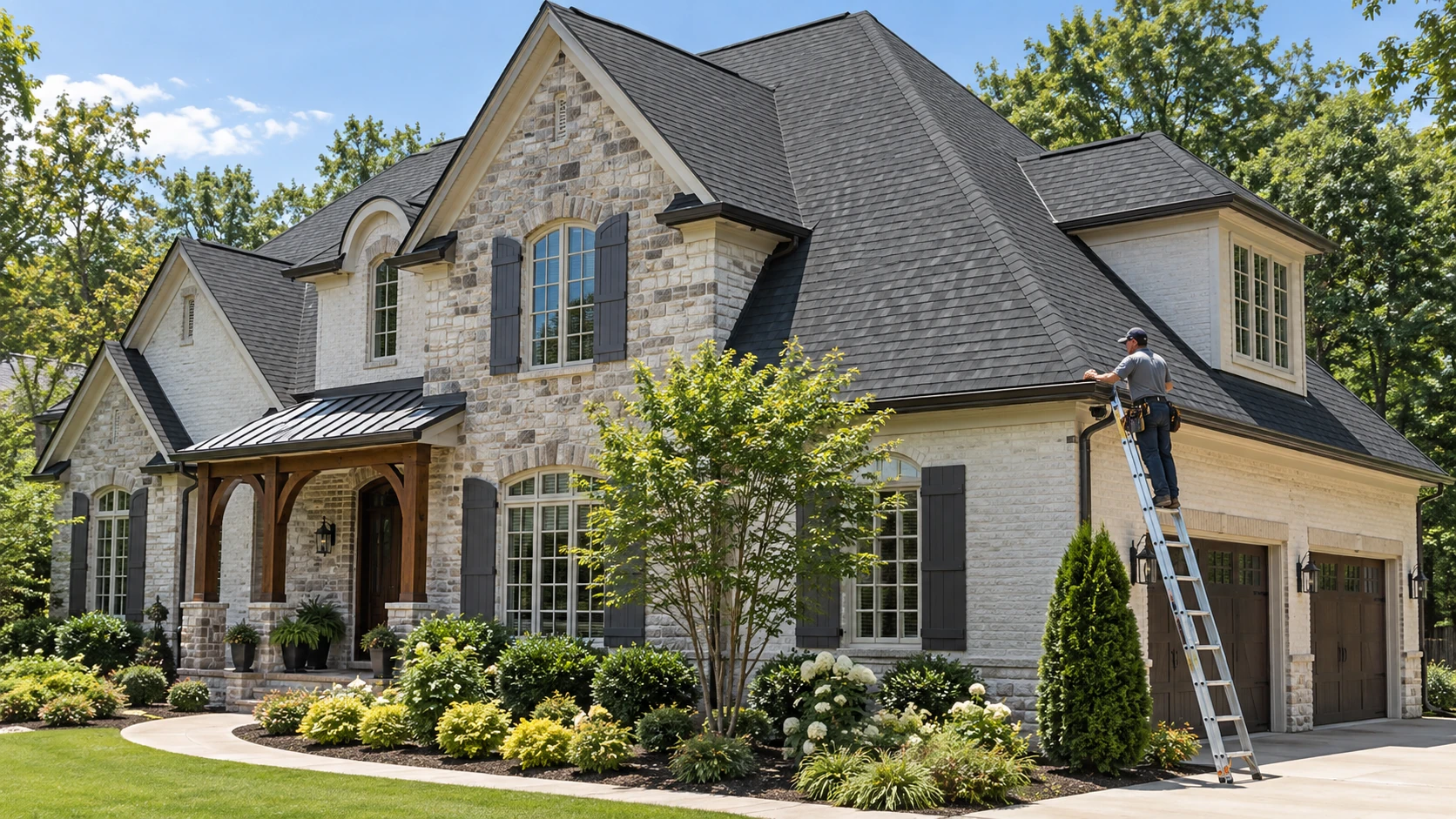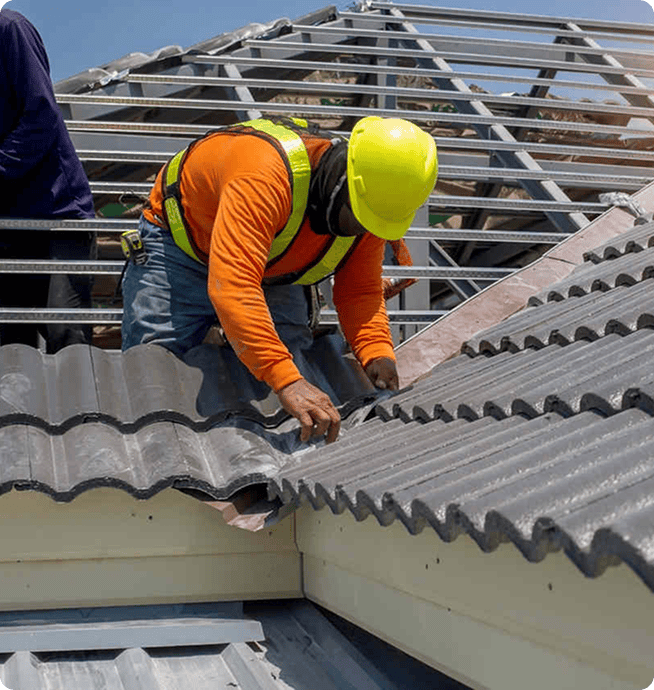
Your roof works around the clock, protecting your home from rain, wind, heat, and the wide temperature swings that define a Carolinas year. Even the best roofing materials eventually wear out, and the real challenge for most homeowners isn’t knowing that a roof will eventually fail — it’s recognizing the warning signs early enough to replace it before that failure causes expensive interior damage.
We’re Blue Rock Roofing & Construction, and for more than 25 years we’ve inspected roofs throughout Charlotte, Fort Mill, and the surrounding Carolinas. We’ve seen firsthand how a $12,000 roof replacement handled proactively can prevent a $30,000+ repair bill involving water damage, mold remediation, and structural framing repair. Waiting for a roof to fail completely is almost always the most expensive path.
Below are the seven warning signs we look for most often, along with what they typically mean, how insurance and inspections factor in, and why early replacement protects both your home and your budget.
How Do You Know When It’s Time to Replace Your Roof?
You know it’s time to replace your roof when you notice multiple warning signs together — an aging roof (20+ years), curling or missing shingles, interior water stains, storm damage, granule loss, frequent repairs, or visible sagging. Any single sign warrants an inspection, but two or more together usually mean replacement is more cost-effective than continued repair.
7 Signs It’s Time to Replace Your Roof
- Your roof is more than 20 years old.
- Shingles are curling, cracking, or missing.
- You notice water stains inside your home.
- Your roof has experienced significant storm damage.
- Granules are collecting in your gutters.
- Your roof requires frequent repairs.
- Your roof is beginning to sag.
We’ll walk through each of these in detail below, since understanding why each sign matters helps you make a more confident decision about repair versus full roof replacement.
1. Is a 20-Year-Old Roof Too Old to Trust?
A roof older than 20 years is approaching or past the end of its expected service life for most standard asphalt shingle systems, even if it looks structurally fine from the ground. According to the National Roofing Contractors Association (NRCA), most new roofs are designed to provide useful service for about 20 years, with actual lifespan varying based on climate, material quality, and maintenance history.
An aging roof can look deceptively fine while hidden deterioration — brittle underlayment, deteriorating seals, and thinning granule protection — is already underway beneath the surface. If your roof is approaching that 20-year mark, a professional inspection is worth scheduling even without visible leaks.
2. What Do Curling, Cracking, or Missing Shingles Mean?
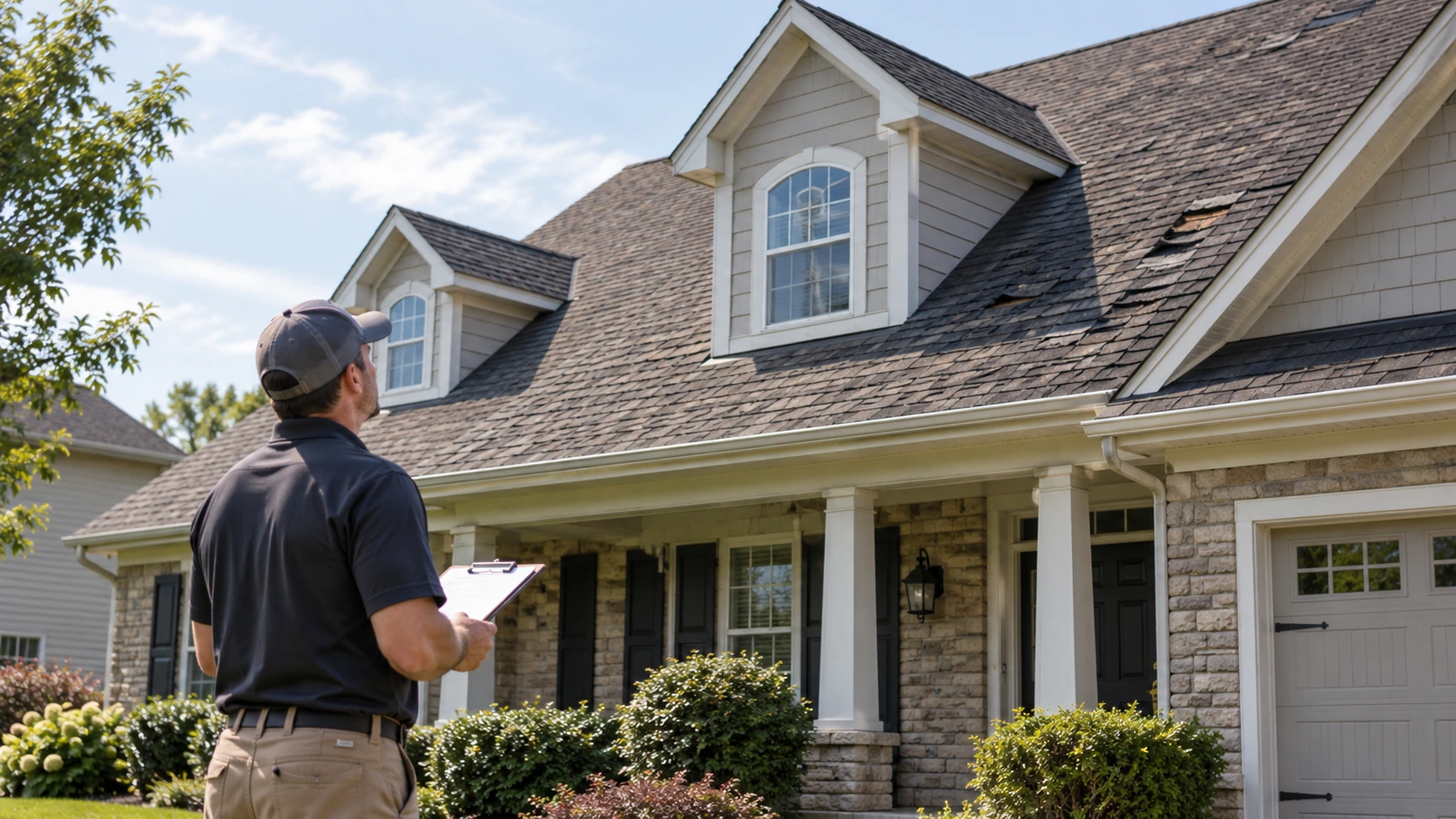
Curling, cracking, or missing shingles mean your roof’s primary weather barrier is failing and can no longer reliably keep moisture out of your home. Once shingles lose their seal or go missing entirely, the underlayment and roof deck beneath are directly exposed, and it’s a matter of time before a leak develops.
Signs Your Shingles Are Failing
- Curled edges on multiple shingles across the roof
- Visible cracking across the shingle surface
- Missing shingles, especially after a windy day or storm
- Loose roofing material that shifts or lifts in wind
- An uneven, patchy appearance across the roof plane
These issues typically indicate the roofing system as a whole is beginning to fail, not just an isolated shingle or two — which is an important distinction when deciding between a targeted roof repair and full replacement.
3. What Do Water Stains on Ceilings Really Indicate?
Water stains on ceilings or walls almost always indicate that moisture is actively entering through your roof, even if the stain itself looks small or hasn’t changed size recently. Left untreated, that moisture can damage insulation, drywall, structural framing, flooring, and in some cases electrical systems.
Even a coin-sized water stain deserves attention. In our experience, homeowners often wait to see if a stain “gets worse” before calling anyone — but by the time it visibly worsens, the moisture has usually already been active behind the surface for weeks or months.
4. Does Storm Damage Always Mean You Need a New Roof?
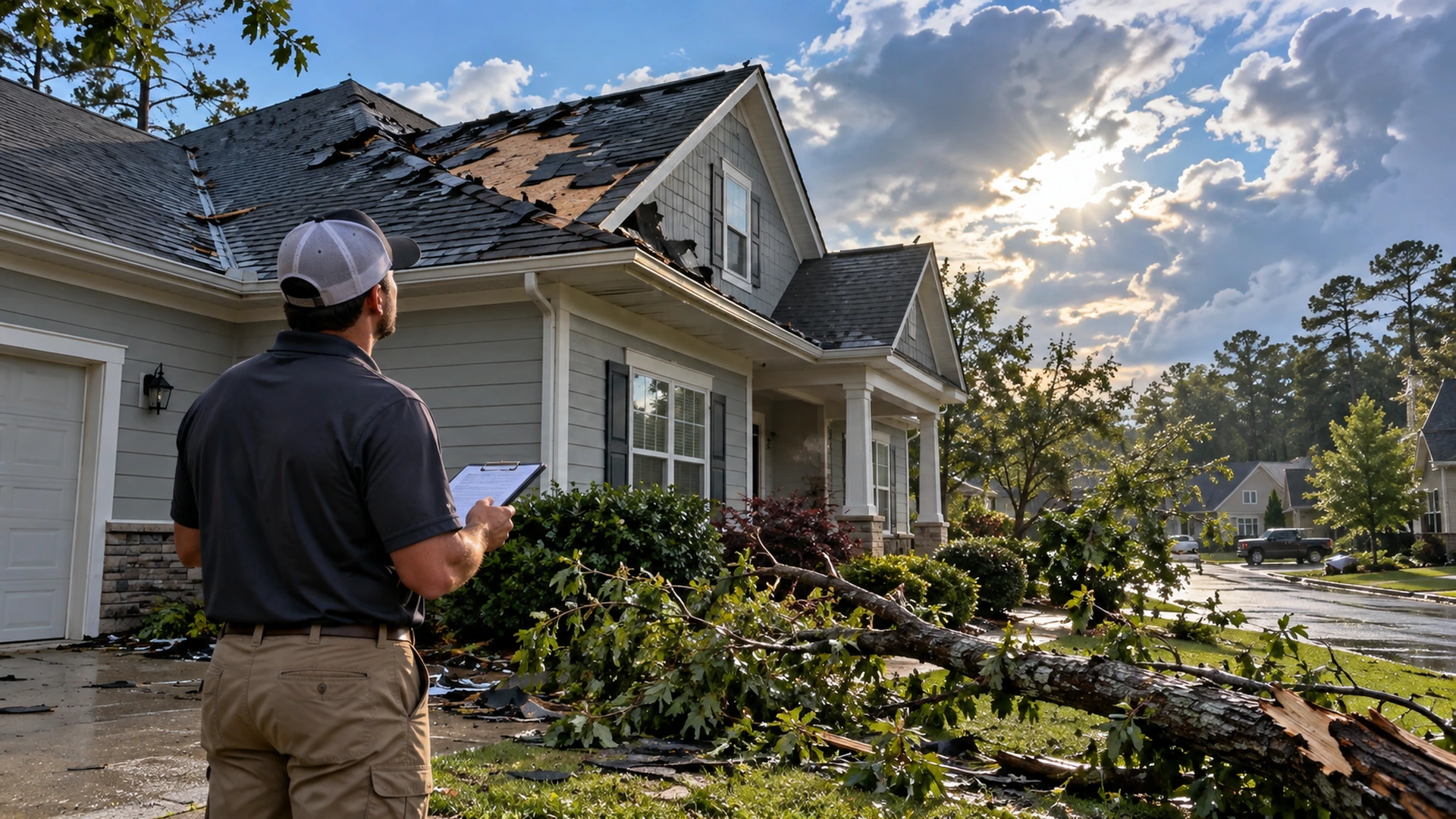
Not always, but significant storm damage — including widespread missing shingles, structural sagging, or repeated storm impacts on an already-aging roof — often tips the balance toward replacement rather than repair. North and South Carolina experience frequent severe storms throughout the year, and repeated exposure compounds wear even when individual storms don’t cause catastrophic damage.
According to NOAA’s National Centers for Environmental Information Storm Events Database, the Carolinas log frequent hail, high-wind, and severe thunderstorm reports every year (NOAA Storm Events Database), which means most roofs in our region absorb storm stress on a near-annual basis, not as a rare event.
Storm Damage Warning Signs to Watch For
- Missing or lifted shingles after high winds
- Dented flashing, vents, or gutter components
- Fallen branches or debris that struck the roof
- New or worsening roof leaks following a storm
- Excess granules collecting in gutters after hail
If your roof has taken repeated storm hits over several years, that cumulative damage is a strong argument for replacement even if no single storm caused an obvious failure. Learn more about how storm damage affects roofing systems and what to check after severe weather.
5. Why Does Granule Loss in Gutters Matter?
Granule loss in your gutters matters because those granules are your shingles’ protective layer against UV rays and weather — once they’re gone, shingles deteriorate significantly faster. Finding excessive granules in gutters or around downspouts is one of the clearest signs that your shingles are nearing the end of their functional life.
Some granule loss is normal, especially on a newer roof shedding manufacturing excess. But a steady, ongoing accumulation over time signals that the protective coating is wearing away and the shingles beneath are becoming increasingly vulnerable to cracking and sun damage.
6. When Do Frequent Roof Repairs Cost More Than Replacement?
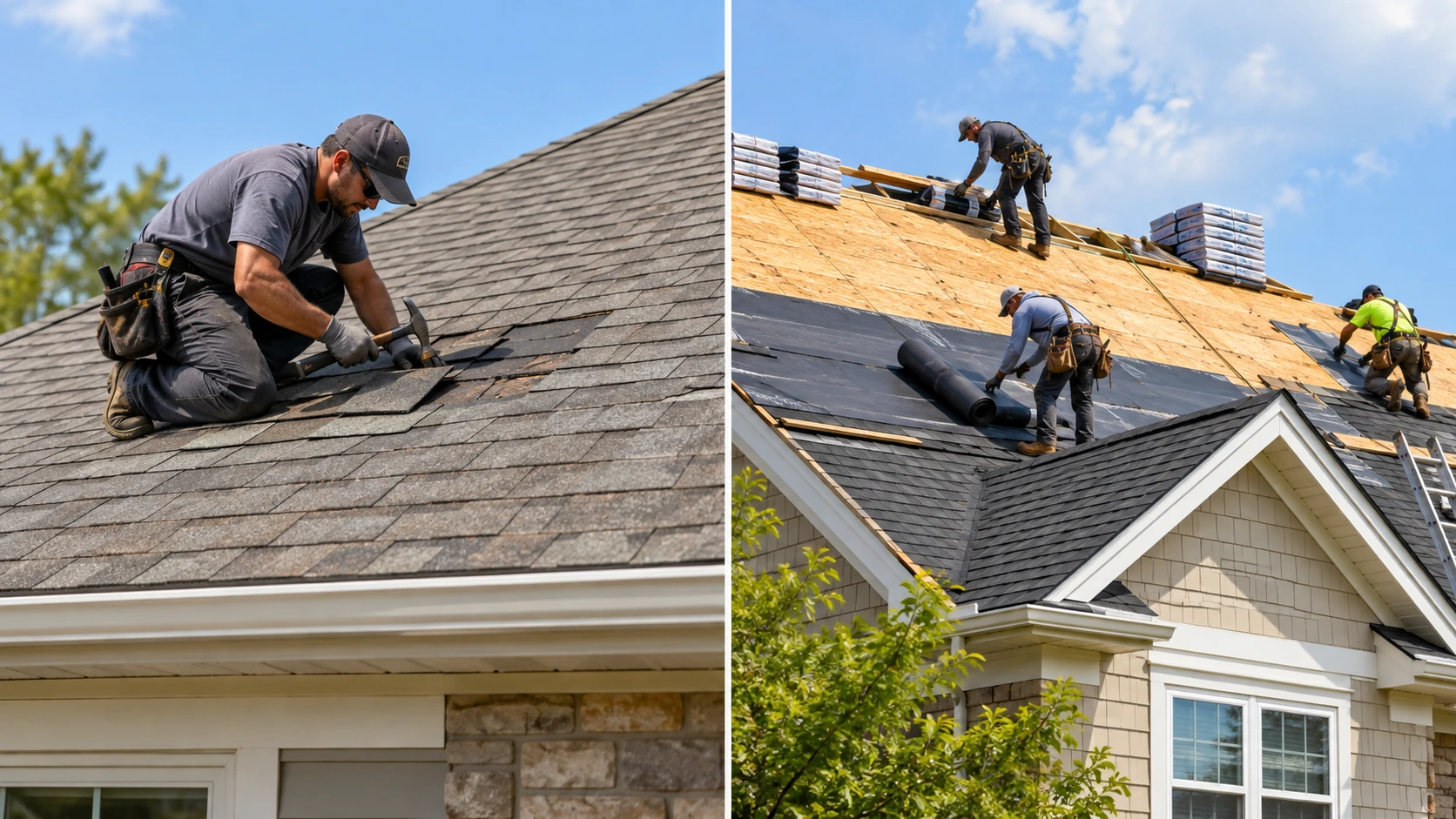
Frequent roof repairs typically cost more than replacement once you’re calling a contractor annually for new leaks or shingle damage, because the cumulative repair cost over just a few years often exceeds the cost of one comprehensive roof replacement. At that point, you’re also still carrying the risk of an aging roof rather than starting fresh with a warrantied system.
Signs Repairs Have Become More Costly Than Replacement
- You’ve called a roofer two or more times in the past 12 months for separate issues
- Each repair addresses a different section of the roof rather than the same recurring spot
- Your roof is already past 15 to 20 years old
- Repairs are becoming more frequent as time passes, not less
- A recent inspection noted multiple areas of concern, not just one
A professional inspection can help determine objectively which option — continued repair or full replacement — offers the better long-term value for your specific roof and budget.
7. What Does a Sagging Roof Mean for My Home’s Structure?
A sagging roof means there is likely structural damage to the roof decking or framing, most often caused by prolonged water intrusion, rot, or long-term deterioration of the wood beneath the roofing material. This is one of the most serious warning signs a homeowner can encounter, and it should never be left unaddressed.
If any section of your roofline appears uneven, dipped, or wavy when viewed from the street, that’s not a cosmetic issue — it’s a structural one. Contact a qualified roofing contractor immediately rather than waiting for a routine inspection window.
Why Does Replacing a Roof Early Save Money Compared to Waiting?
Replacing a roof before major failure saves money because it avoids the compounding costs of interior water damage, mold remediation, drywall replacement, structural framing repair, and insulation replacement that typically follow a full roof failure. Many homeowners delay replacement to avoid the upfront cost, only to face a significantly larger bill once hidden damage spreads.
Costs Early Roof Replacement Helps You Avoid
- Interior water damage to ceilings, walls, and flooring
- Mold remediation in attics and wall cavities
- Drywall replacement from water-damaged ceilings or walls
- Structural framing repairs from prolonged moisture exposure
- Insulation replacement after water saturation
- Emergency roofing costs from after-hours or storm-related failures
A proactive approach to roof replacement consistently protects both your home’s structure and your household budget more effectively than a reactive, wait-until-it-fails approach.
What Does a Professional Roof Inspection Actually Check?
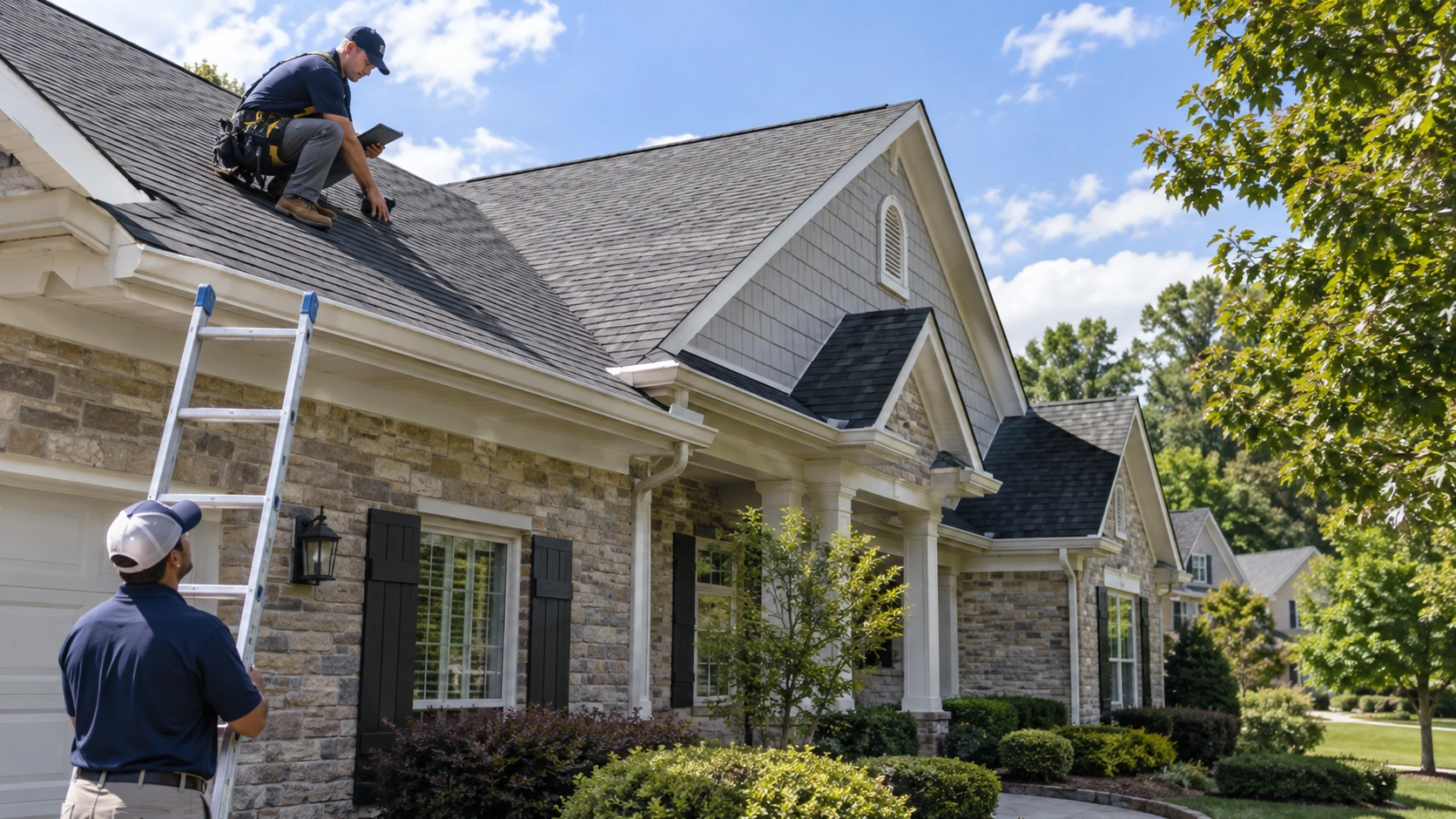
A professional roof inspection evaluates roofing materials, flashing, roof decking, ventilation, drainage, signs of moisture intrusion, storm damage, and the roof’s overall remaining lifespan. This comprehensive review gives homeowners the specific information needed to decide between repair and replacement, rather than guessing based on a single visible issue.
What a Qualified Roofing Contractor Evaluates
- Condition and age of existing roofing materials
- Flashing around chimneys, vents, and roof valleys
- Structural integrity of the roof decking
- Attic ventilation and moisture levels
- Gutter and drainage performance
- Signs of active or past moisture intrusion
- Evidence of storm-related damage
- Overall estimated remaining roof lifespan
Not every aging roof needs immediate replacement — a thorough inspection is what turns a guess into an informed, confident decision.
How long does a typical asphalt shingle roof last in the Carolinas?
Most asphalt shingle roofs in the Charlotte and Fort Mill area last 20 to 25 years, though this range depends on shingle quality, ventilation, and how much storm exposure the roof has absorbed. Homes with poor attic ventilation or repeated severe weather exposure often see a shorter functional lifespan than this average.
Can I replace just part of my roof instead of the whole thing?
Partial roof replacement is sometimes possible if damage is isolated to one section and the rest of the roof is in good condition and a similar age. However, mismatched shingle batches, uneven aging, and inconsistent warranty coverage make a full replacement the better long-term option in most cases.
How much does a full roof replacement typically cost?
Roof replacement costs vary significantly based on roof size, material choice, pitch, and the amount of underlying repair needed, which is why a free on-site estimate is the most accurate way to get a number specific to your home. Homes requiring deck repair or structural work will cost more than straightforward tear-off-and-replace projects.
Will my homeowner’s insurance help pay for a roof replacement?
Insurance coverage for roof replacement depends on the cause of damage, your specific policy, and your deductible, with storm and wind damage typically covered while normal wear and aging usually are not. A professional inspection with documentation is the best first step before contacting your insurance provider about a potential claim.
How long does a full roof replacement take to complete?
Most residential roof replacements in the Charlotte and Fort Mill area are completed in one to three days, depending on roof size, pitch, material, and weather conditions during installation. Larger homes or roofs requiring significant deck repair may take longer.
Is it cheaper to repair my roof multiple times or replace it once?
Replacing a roof once is typically cheaper over time than multiple repeated repairs, especially once a roof is past 15 to 20 years old and repairs are becoming more frequent. A professional inspection can calculate your specific numbers and show which option offers better long-term value for your home.
What’s the first thing I should do if I suspect my roof needs replacing?
Schedule a professional roof inspection before making any decisions, since an experienced roofing contractor can accurately assess the roof’s condition and give you clear repair-versus-replacement guidance. Avoid climbing onto the roof yourself — a ground-level visual check is safe, but full evaluation requires professional equipment and training.
Schedule Your Free Roof Inspection in Charlotte or Fort Mill
At Blue Rock Roofing & Construction, we believe homeowners deserve honest recommendations, quality workmanship, and clear communication throughout every project. With more than 25 years serving the Carolinas, our experienced team will carefully inspect your roofing system and explain your options — repair or full replacement — without high-pressure sales tactics.
We proudly serve homeowners throughout Fort Mill, Charlotte, Rock Hill, Lake Wylie, Waxhaw, Gastonia, Clover, Lancaster, Pineville, Weddington, and surrounding Mecklenburg and York County communities. Whether you’ve noticed one warning sign or several, our team at Blue Rock Roofing & Construction is ready to help you make an informed decision about your home’s protection.
Call (704) 266-0448 today or contact us online to schedule your free roof inspection and estimate.