If you are building a home or replacing a roof in the Carolinas, you have probably weighed metal vs asphalt shingles. Both are popular choices, but they serve different budgets, timelines, and priorities. Nick has been installing both for over 25 years across Fort Mill, Charlotte, Rock Hill, and Gastonia. This post breaks down the real differences so you can choose the right material for your home and climate.
We install both metal roofing and asphalt shingle roofing every month. There is no single right answer. The best choice depends on how long you plan to stay in the home, your budget, your roof pitch, and how much maintenance you want to deal with over the years. Let us look at how they compare.
How Long Do Metal vs Asphalt Shingles Last?
Metal roofs last 50 or more years, while asphalt shingles typically last 15 to 30 years depending on the quality and installation. A standing-seam metal roof can last even longer. The lifespan gap is the single biggest difference between the two materials and the main reason homeowners choose metal.
According to the Metal Roofing Alliance, a properly installed metal roof lasts 50-plus years. That is two to three times longer than asphalt. The Metal Construction Association has found that coated standing-seam steel roofs can last up to 70 years. Compare that to asphalt. GAF notes that 3-tab shingles carry a 25-year warranty term. Architectural shingles come with a lifetime limited warranty for manufacturing defects. In practice, architectural shingles on Carolina homes last 20 to 30 years before replacement. Our Carolina sun and humidity wear shingles down faster than a drier climate would.
What Does Each Material Cost?
Metal roofing costs two to three times more than asphalt up front. A typical asphalt roof on a 2,000-square-foot Carolina home runs $6,000 to $12,000 installed. A standing-seam metal roof costs $15,000 to $30,000.
We are straight with homeowners about this. If you plan to sell the home in five years, asphalt makes more financial sense. You will not recoup the metal roof premium in that timeframe. But if this is your forever home, metal pays for itself because you avoid one or two full roof replacements over the life of the material. The Metal Roofing Alliance reports that homeowners typically recoup 50 to 70 percent of their metal roof investment at resale, depending on location.
Which Material Handles Carolina Storms Better?
Metal roofs handle high winds, hail, and heavy rain better than asphalt shingles. Most metal roofing systems are rated for wind speeds up to 140 or 160 miles per hour. Asphalt shingles typically carry wind ratings of 60 to 130 miles per hour depending on the product and installation method.
Carolina summers bring severe thunderstorms and the occasional hurricane remnant. We have torn off shingle roofs in Fort Mill and Charlotte that lost entire sections to a single storm. The wind gets under a loose shingle tab and rips a whole row off. Metal panels are interlocked and fastened to the deck with hidden clips, so they hold tight in wind that would strip shingles. Hail is another factor. Large hail can dent metal, but it typically does not compromise the waterproofing. Hail cracks asphalt shingles and tears granules off the surface, shortening the roof life. The Metal Roofing Alliance notes that metal roofs carry Class 4 hail protection ratings per UL 2218, which is the highest impact resistance rating available.
How Do Metal and Asphalt Compare for Energy Efficiency?
Metal roofs reflect solar heat and can reduce cooling costs by 10 to 40 percent in warm climates. Asphalt shingles absorb heat, which transfers into your attic and raises cooling loads during Carolina summers. The energy savings from metal are real but take years to offset the higher up-front cost.
The Metal Roofing Alliance states that metal is one of the most energy-efficient roofing materials available and can save homeowners between 10 and 40 percent on energy costs. In Charlotte and Fort Mill, where summer temperatures regularly hit the 90s and air conditioning runs from May through September, that adds up. A reflective metal roof can keep your attic 20 to 30 degrees cooler than a dark asphalt roof. That means less strain on your HVAC system and lower utility bills. The savings are most noticeable on single-story homes with large roof areas and minimal attic insulation.
What Are the Pros of Asphalt Shingles?
Asphalt shingles are affordable, widely available, easy to repair, and come in dozens of colors and styles. The downside is a shorter lifespan and vulnerability to wind and hail damage.
Here is a quick breakdown of asphalt shingle pros and cons:
- Lower up-front cost than metal.
- Available in many colors and styles.
- Easy to repair individual damaged shingles.
- Familiar to most roofing contractors.
- Shorter lifespan, 15 to 30 years.
- Vulnerable to wind lift and hail damage.
- Granule loss over time reduces protection.
We install architectural shingles on most homes in the Carolinas. They are thicker than 3-tab shingles, have a dimensional look that most homeowners prefer, and carry longer warranties. GAF Timberline HDZ shingles, for example, are eligible for a 15-year wind warranty with no maximum wind speed limit when installed with the proper accessories. That is impressive for asphalt. But even the best architectural shingle will not match a metal roof for longevity or storm resistance.
What Are the Pros of Metal Roofing?
Metal roofing offers exceptional durability, energy efficiency, fire resistance, and a lifespan two to three times longer than asphalt. The drawbacks are higher cost and more complex installation.
Here is the metal roofing pros and cons list:
- Lifespan of 50-plus years.
- High wind and hail resistance.
- Reflects heat, lowering cooling costs.
- Fire resistant with Class A rating.
- Higher up-front cost than asphalt.
- Installation requires specialized skills.
- Noise without proper decking and insulation.
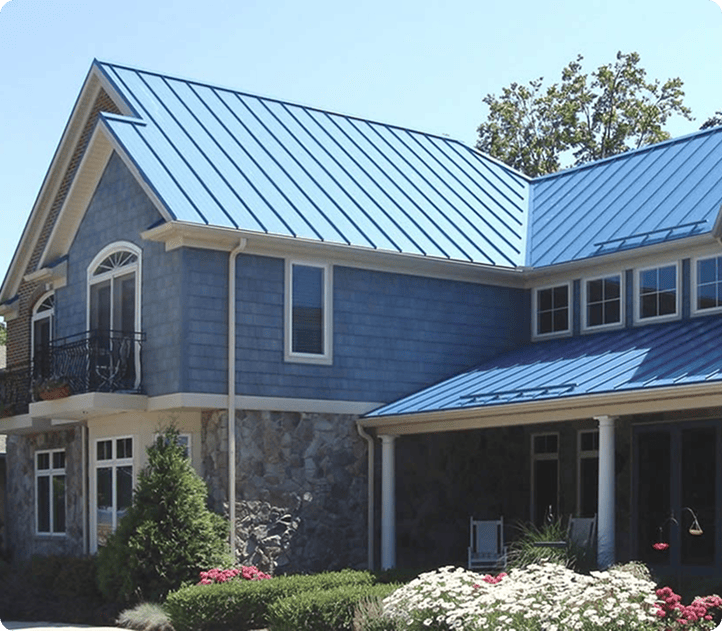
Standing-seam is the metal roof style we install most. The panels run vertically up the roof and connect with hidden fasteners, so there are no exposed screws to back out or leak over time. If you want to see examples or get a quote, check out our metal roof installation page. We also install corrugated and stamped metal panels for homeowners who want a different look at a lower price point than standing-seam.
Which Roofing Material Is Best for Carolina Weather?
Both materials work in the Carolina climate, but metal handles the heat, humidity, and storms better. Asphalt shingles are more susceptible to thermal cycling, which causes curling and cracking over time. Metal panels expand and contract but are designed for it, so they hold up longer in our temperature swings.
In our experience, the biggest killer of asphalt roofs in the Carolinas is not wind or hail. It is heat. Our summers bake shingles day after day, and the UV exposure breaks down the asphalt over time. You see it as granule loss in your gutters. Once the granules are gone, the shingle dries out and cracks. Metal does not have this problem. It reflects heat instead of absorbing it, and the painted finishes on quality metal panels are engineered to resist fading and chalking for decades. If you live in a shaded area with mature trees, asphalt holds up better because it gets less direct sun. On exposed homes with southern exposure, metal is the smarter long-term play.
Can You Install Metal Roofing Over Existing Shingles?
Yes, in some cases you can install metal roofing over one existing layer of asphalt shingles. This saves on tear-off costs and disposal fees. However, the existing roof must be in decent condition, the decking must be sound, and local building codes must allow it. We inspect the existing roof before recommending this approach.
We have done it both ways. Installing over existing shingles works when the old roof is flat and solid. But if there is any rot in the decking, you are covering up a problem that will get worse. We always inspect the attic from below to check for soft spots, water stains, and rot. If the decking is compromised, we tear off the old shingles first. It costs more, but you do not want to screw a 50-year metal roof to rotting wood. Customers tell us they appreciate that we check the deck before making a recommendation instead of just going for the cheaper option.
Frequently Asked Questions About Metal vs Asphalt Shingles
Is a metal roof louder than an asphalt roof in the rain?
A metal roof is not significantly louder than asphalt when installed with solid decking and proper insulation. The old idea of metal roofs being noisy comes from barns and porches where metal was installed over open framing. On a residential home with plywood decking and attic insulation, the sound difference is minimal. Most homeowners cannot tell the difference from inside.
Does a metal roof increase home value in the Carolinas?
Yes. A metal roof can increase home value, especially in neighborhoods where buyers prioritize energy efficiency and durability. The Metal Roofing Alliance reports that homeowners recoup 50 to 70 percent of their investment at resale. In the Carolinas, where storm resistance matters to buyers, a metal roof can be a strong selling point.
Can metal roofs rust in the Carolina humidity?
Quality metal roofs do not rust in Carolina humidity. Modern metal roofing uses galvanized or Galvalume steel coated with aluminum and zinc, then painted with a baked-on finish. These coatings prevent corrosion even in our humid climate. We have installed metal roofs across Charlotte and Fort Mill that show zero rust after 15-plus years of exposure.
How do I know if my roof can support a metal roof?
Most residential roof structures can support a metal roof because metal is lighter than asphalt shingles. A metal roof weighs about 50 to 150 pounds per 100 square feet, while asphalt shingles weigh 200 to 400 pounds per square. If your roof currently holds asphalt shingles, it can handle metal. We verify the structure during inspection.
Are asphalt shingles getting more expensive?
Asphalt shingle prices have risen steadily over the past several years due to petroleum costs and supply chain factors. The price gap between budget architectural shingles and entry-level metal roofing has narrowed. That said, asphalt remains significantly cheaper than standing-seam metal for most homes.
Which roofing material is best for a low-pitch roof?
For low-pitch roofs, standing-seam metal is the better choice. Asphalt shingles require a minimum pitch of 2:12 with special underlayment. Standing-seam metal works on pitches as low as 1:12 because the panels shed water efficiently. If your roof has a low slope, talk to us about metal options.
Do metal roofs require maintenance in the Carolinas?
Metal roofs require very little maintenance. We recommend an annual visual inspection to check for loose fasteners, debris in valleys, and paint condition. Unlike asphalt, metal does not lose granules, curl, or crack. Occasional cleaning with a hose keeps the panels looking new. That low maintenance is a major selling point.
Ready to Choose Your Roofing Material?
Both metal and asphalt shingles have their place on Carolina homes. The right choice depends on your budget, your timeline, and what matters most to you. If you want the longest-lasting roof, metal wins. If you need an affordable roof that lasts 20-plus years, asphalt is practical.
Call Blue Rock Roofing and Construction at (704) 266-0448 or visit our contact page. Nick and our crew will inspect your roof, talk through your options, and give you an honest recommendation. We install both materials and we will not push you toward one just because it costs more. Family-owned, 25-plus years of experience, and right here in the Carolinas.
Frequently Asked Questions
Which roofing material is better for a home near Lake Wylie or the Catawba River with lots of tree cover?
Shaded homes near water often keep asphalt shingles in better condition longer because reduced direct sun slows UV breakdown. However, tree cover means more falling limbs and debris, which asphalt handles better in terms of repair cost. If your home has southern exposure with no shade, metal becomes the stronger choice. We assess sun exposure and tree proximity during every estimate. Call (704) 266-0448 to schedule yours.
Can I mix metal and asphalt on the same roof, like metal over a porch and shingles on the main house?
Yes, this is common in the Carolinas and something we install regularly. Metal accent roofs over porches, bay windows, or dormers pair well with asphalt shingles on the main roof planes, both for aesthetics and because porch roofs see more foot traffic and benefit from metal’s durability. We handle the transition flashing carefully since that junction is a common leak point if done wrong.
Does switching to metal roofing lower my homeowners insurance premium?
Many insurers offer discounts for metal roofing because of its Class 4 impact resistance and superior wind performance, though the discount amount varies by carrier and region. It is worth calling your insurance agent before your project to ask specifically about a metal roof credit. We provide documentation of the roofing system installed that you can submit to your insurer.
How long does a metal roof installation take compared to asphalt in Fort Mill?
Asphalt shingle installation typically takes one to two days for an average home, while a standing-seam metal roof usually takes three to five days due to the custom panel measurements and detail work at seams, valleys, and penetrations. Weather and roof complexity can extend either timeline. We give you a specific schedule after the initial inspection.
Will hailstorms in the Charlotte area void a metal roof warranty?
No, normal hail exposure does not void a metal roof warranty. Metal panels carry a Class 4 impact rating under UL 2218, the highest available, and the Metal Roofing Alliance confirms this rating reflects real-world hail performance rather than lab conditions alone. Cosmetic denting from severe hail is typically not covered, but the waterproofing performance remains intact and warrantied. Ask us about specific manufacturer terms during your consultation.
Can I paint or repaint a metal roof to change its color later?
Yes, metal roofs can be recoated after their factory finish begins to fade, typically after 20 or more years, using specialized elastomeric or acrylic roof coatings. This is far less disruptive than a full roof replacement. It is not a DIY project, though, since surface prep and coating compatibility matter for adhesion. Our metal roofing team can advise on recoating options as your roof ages.