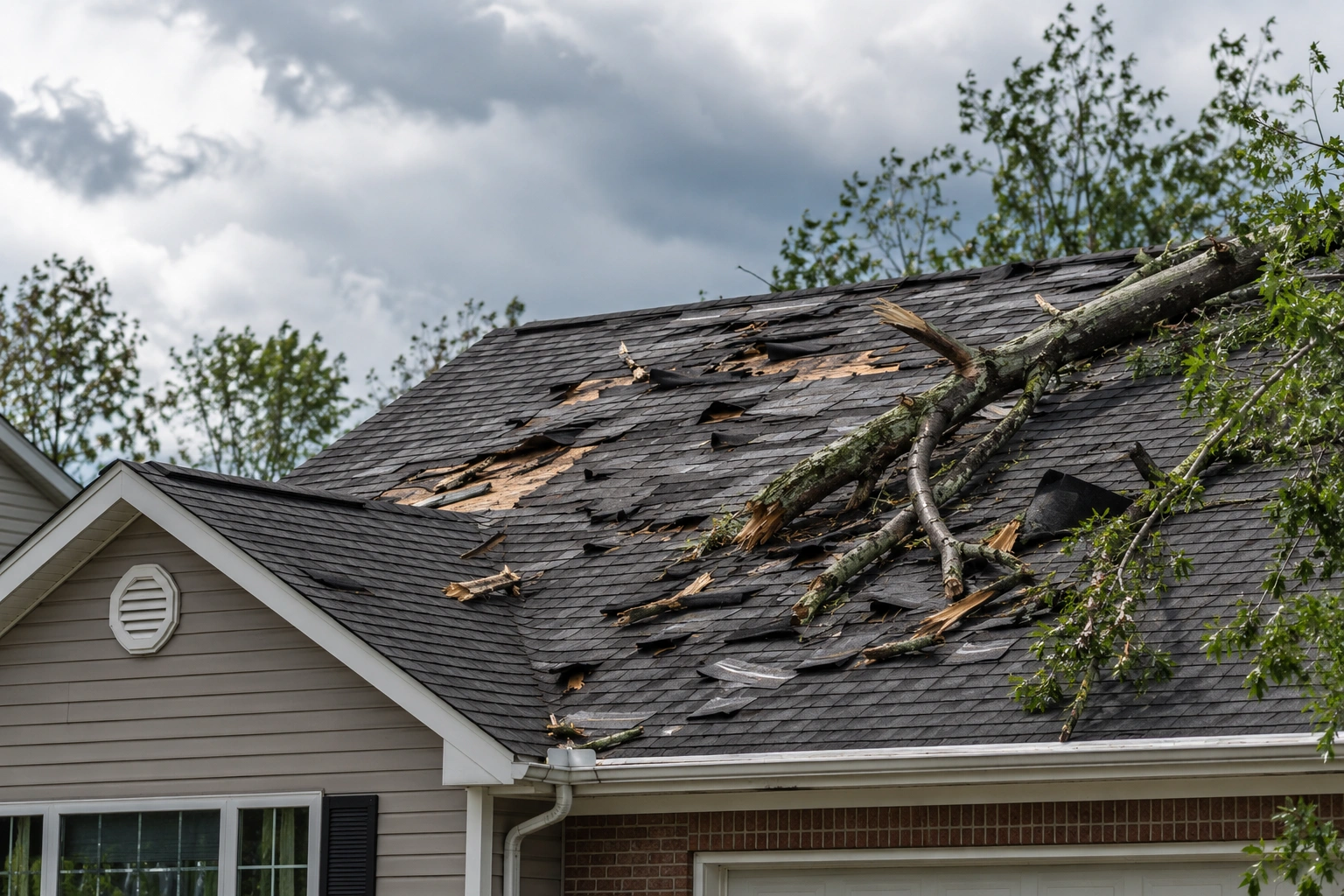
A roof insurance claim checklist helps homeowners respond in the right order. The goal is to protect the property, document what happened, understand the policy, and give the insurer enough information to evaluate the loss. Acting quickly matters, but rushing into permanent repairs or signing a contract before the damage is reviewed can create avoidable problems.
The steps below explain how the roof insurance claim process commonly works in North Carolina and South Carolina. Coverage, deductibles, deadlines, and payment terms vary by policy, so the insurance contract and the carrier’s written claim decision remain the controlling documents.
Does Homeowners Insurance Cover Storm-Damaged Roofing?
Homeowners insurance may cover roof damage caused by a sudden event such as wind, hail, falling debris, or a tree strike. Coverage is not automatic simply because damage appeared after bad weather. The insurer will look at the cause of loss, the condition of the roof, policy exclusions, applicable deductibles, and whether the damage occurred during the policy period.

Covered Events Depend on the Policy
A standard policy often covers direct physical damage from certain wind and hail events, but coastal homeowners may have separate windstorm or hail coverage. North Carolina’s Department of Insurance advises policyholders to report a wind or hail loss to their homeowners insurer, even when a separate windstorm or hail policy also applies. roof damage can include:
- Shingles torn away or lifted by wind
- Hail impacts that crack, bruise, or remove protective granules
- Damage from branches, trees, or airborne debris
- Broken flashing, vents, ridge caps, or roof accessories
- Interior water damage that results from a covered roof opening
The exact cause matters. Rain entering through storm-created damage may be treated differently from water entering through an old, deteriorated roof that has leaked over time.
Flood Damage Is a Separate Type of Claim
Homeowners policies generally do not cover flood or rising water damage. South Carolina’s Department of Insurance states that standard homeowners insurance does not include flood damage, including storm surge, while North Carolina’s Department of Insurance gives the same warning for flood and rising water claims. Separate flood insurance may be needed. ion becomes important when a storm causes both roof damage and ground-level flooding. Wind damage to the roof may fall under one policy, while flood damage to lower floors or contents may involve a separate flood claim.
Maintenance and Gradual Deterioration Are Commonly Disputed
Insurance is generally intended for sudden, accidental losses, not the normal cost of maintaining an aging roof. Worn shingles, long-term leaks, rot, rust, poor installation, and deferred maintenance may not be covered. A storm can also expose an older problem rather than create a new one.
Imagine a roof with deteriorated flashing that has allowed small amounts of moisture into the attic for months. A heavy storm makes the leak noticeable inside the home. The insurer may investigate whether the storm created new damage or merely revealed a pre-existing condition.
Roof Age Can Affect the Amount Paid
Some policies settle covered roof damage at replacement cost, while others use actual cash value, which may account for age and depreciation. In a replacement-cost claim, the insurer may initially pay the depreciated amount and release recoverable depreciation after completed repairs and receipts are submitted. North Carolina’s Department of Insurance recommends confirming exactly how the policy handles replacement cost and recoverable depreciation. a’s Department of Insurance also advises homeowners to check whether an older roof is covered at replacement cost or actual cash value. ductible as well. Wind, hail, named-storm, or hurricane deductibles may differ from the standard all-perils deductible. The deductible is normally the homeowner’s share of a covered loss, not an amount paid directly to the contractor before the claim is reviewed.
Immediate Steps After Discovering Roof Damage
The first priority is safety. A damaged roof can have loose materials, unstable decking, hidden electrical hazards, and slippery surfaces. Homeowners should inspect from the ground or from a safe interior location rather than climbing onto the roof.
Protect People Before Protecting Materials
Move family members and pets away from rooms with sagging ceilings, active water entry, broken glass, or exposed wiring. If a tree has struck the structure, part of the roof has collapsed, or electrical service is affected, contact emergency services or the appropriate utility before entering the area.
From a safe location, look for:
- Missing or displaced shingles
- Tree limbs resting on the roof
- Damaged gutters or downspouts
- Pieces of roofing material on the ground
- Water stains, wet insulation, or dripping ceilings
- Daylight visible through the attic or roof deck
Prevent Additional Damage Without Making Permanent Changes
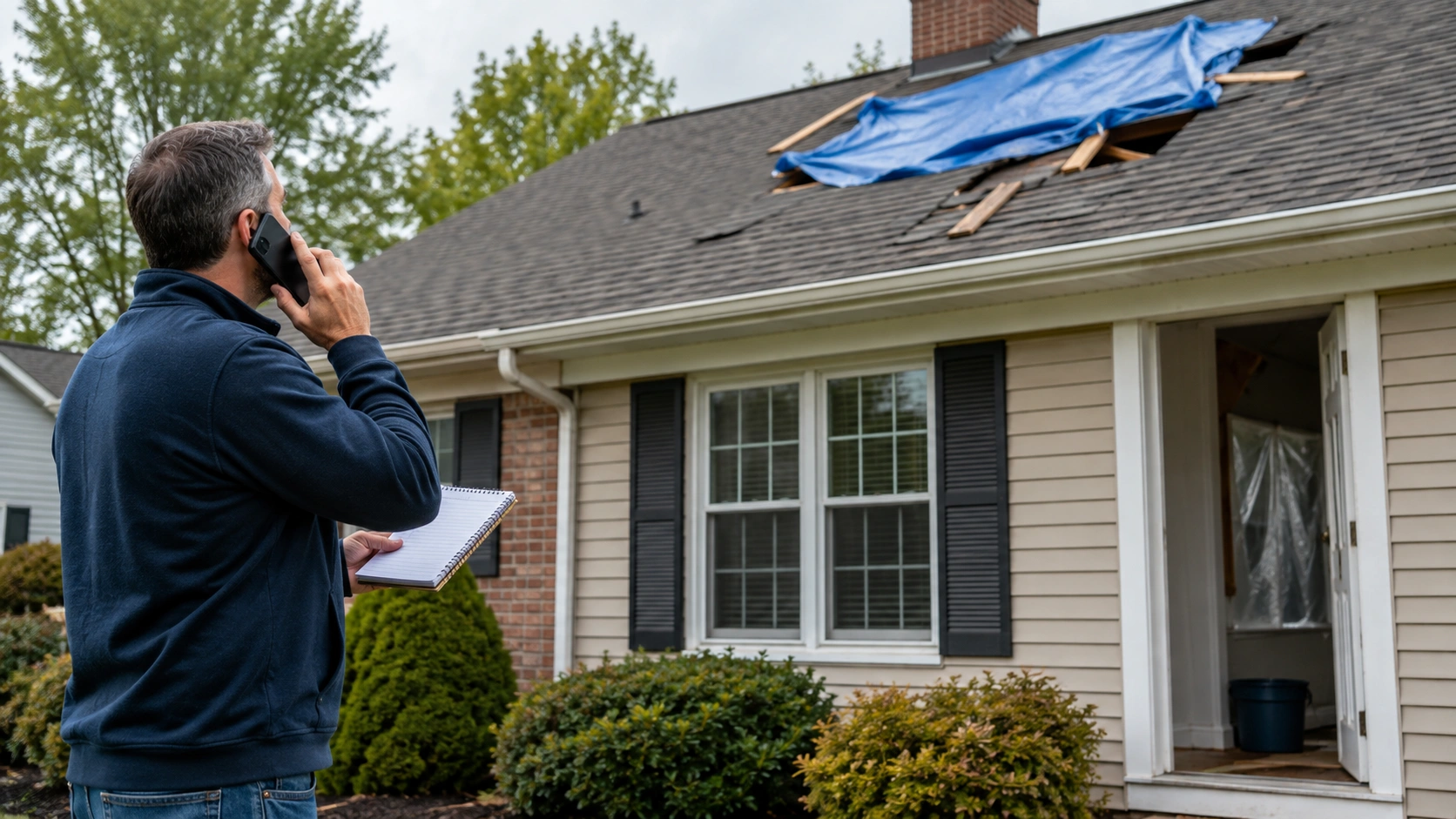
Most policies require the homeowner to take reasonable steps to prevent further loss. That may involve emergency tarping, placing containers under active leaks, moving belongings away from water, or arranging temporary board-up work. North Carolina and South Carolina insurance guidance recommends temporary protection and keeping the related receipts. large sections of roofing, discard damaged materials, or authorize permanent reconstruction before the insurer has had a reasonable opportunity to inspect, unless delaying the work would create a safety emergency. Photograph the condition before and after any temporary repair.
Save Every Storm-Related Receipt
Keep invoices and receipts for tarps, emergency labor, temporary lodging, water extraction, tree removal, and other necessary expenses. Coverage for each expense depends on the policy, but missing documentation can make reimbursement harder to evaluate.
Create one folder for the entire claim. Include photographs, videos, claim emails, contractor reports, estimates, receipts, names of representatives, and notes from every phone call.
Roof Insurance Claim Checklist
Use this checklist to organize the process from the first inspection through the final payment.

The sequence may change when emergency conditions require immediate work, but each item should be addressed.
- Review the insurance policy. Find the declarations page, roof settlement terms, deductible, exclusions, endorsements, and claim-reporting instructions.
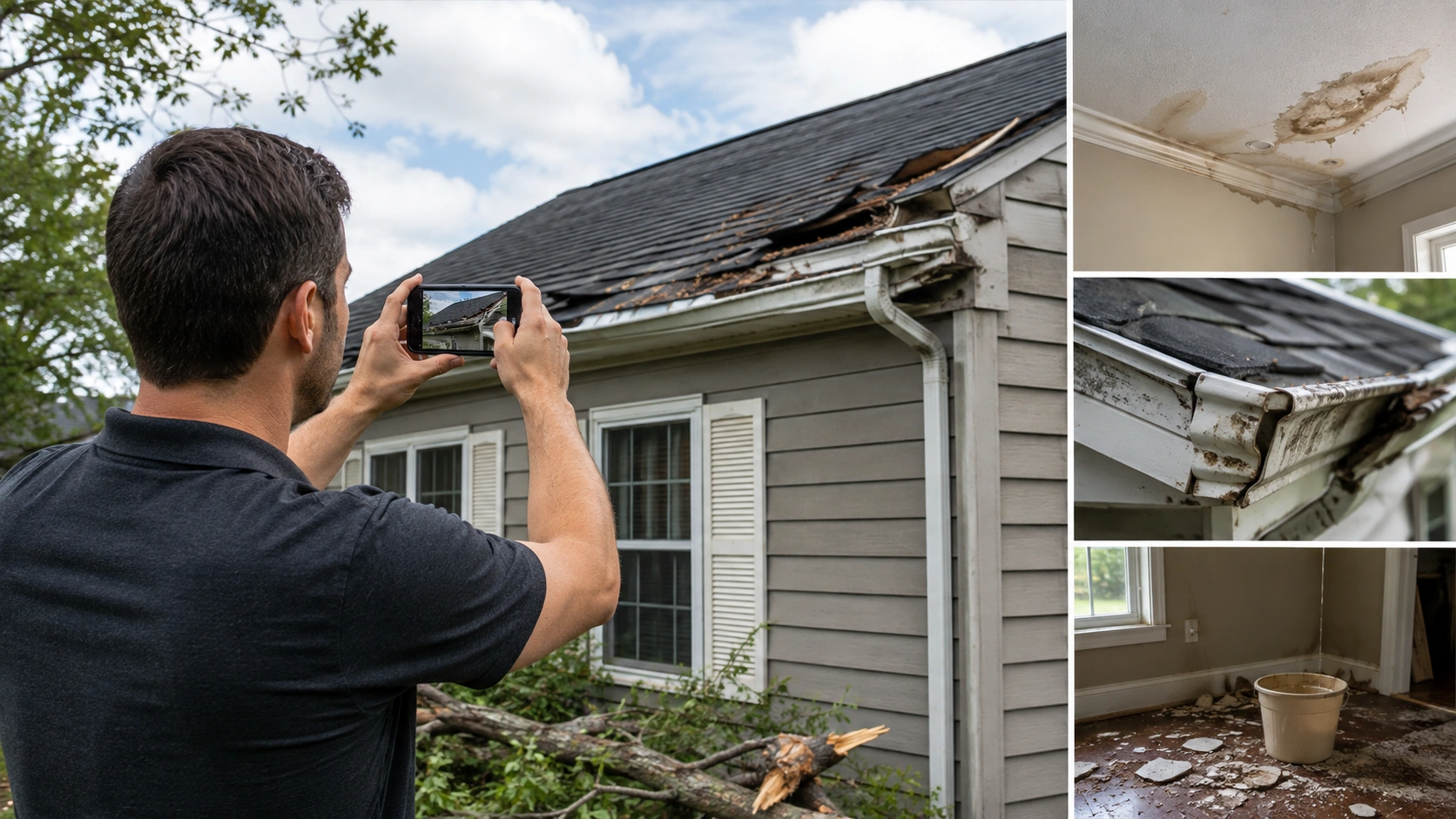
- Photograph visible damage. Capture wide views and close views of the roof, yard, siding, gutters, windows, attic, ceilings, and damaged belongings.
- Document the storm date. Record when the storm occurred, when damage was first noticed, and what conditions were observed.
- Arrange temporary protection. Stop active water entry when it can be done safely, and keep receipts for emergency work.
- Schedule a professional roof inspection. Ask for photographs, written findings, affected roof components, and a recommended repair scope.
- Notify the insurance provider. Report the loss using the carrier’s required method and obtain a claim number.
- Obtain a written roofing estimate. The estimate should describe materials, labor, removal, disposal, flashing, ventilation, accessories, and code-related work where applicable.
- Prepare for the adjuster visit. Organize the policy information, storm photos, inspection report, receipts, and estimate.
- Review the insurer’s claim summary. Compare the covered scope, measurements, material allowances, depreciation, deductible, and excluded items with the observed damage.
- Ask questions in writing. Request an explanation for missing items, denied components, or differences between the insurer’s scope and the contractor’s estimate.
- Select a qualified roofing contractor. Review licensing, insurance, local references, contract terms, warranties, and the exact work included.
- Keep documents through completion. Save final invoices, change orders, photographs, proof of payment, permits, inspection records, and warranty documents.
A checklist does not guarantee coverage or approval. It does, however, reduce confusion and create a clear record of what happened, what was inspected, and how the property was protected.
How to Document Roof Damage for an Insurance Claim
Strong documentation shows the condition of the property without asking the homeowner to diagnose the technical cause. The best record combines exterior photographs, interior evidence, storm information, and professional inspection findings.

Start With Wide Views, Then Move Closer
Take wide photographs of every side of the home before focusing on individual areas. Wide views help establish location and context. Close photographs can then show missing shingles, displaced flashing, dents, impact marks, punctures, or fallen debris.
Use a consistent path around the property. Photograph the front, right side, rear, and left side, then capture detached structures and surrounding trees. Do not climb onto the roof simply to obtain a closer image.
Record Related Exterior Damage
Hail and wind rarely affect only one roof surface. Photograph dents or marks on gutters, downspouts, siding, window screens, metal vents, fencing, garage doors, outdoor equipment, and soft metals. These areas can help establish the storm pattern, although the insurer will still determine whether each item is covered.
Leave fallen branches or damaged materials in place when safe to do so until they have been documented. If debris must be moved for safety, take photographs first and save representative damaged materials when practical.
Gutters and downspouts should also be photographed closely. Hail can leave dents, while wind and falling branches may pull sections away from the fascia or affect drainage. When this damage is present, professional Gutter Services may be needed alongside the roofing work to restore proper water flow around the property.
Document Interior Moisture Carefully
Inside the home, photograph ceiling stains, bubbling paint, wet drywall, damp insulation, attic moisture, and damaged belongings. Include a wide photograph of the room and a close photograph of the affected area. Note when the moisture first appeared and whether it changed during later rainfall.
A moisture stain does not prove that the roof itself is the source. Plumbing, HVAC condensation, siding, windows, and other building components can also allow water inside. A professional inspection should trace the likely entry point rather than assuming every ceiling stain is roof damage.
Keep a Written Claim Timeline
A simple timeline can prevent conflicting dates later. Record:
- Date and approximate time of the storm
- Date the damage was discovered
- Date temporary repairs were completed
- Date the insurer was notified
- Date of the contractor inspection
- Date of the adjuster visit
- Dates estimates, decisions, payments, or requests were received
North Carolina’s Department of Insurance recommends providing a summary of what happened, the extent of the claimed damage, available photographs or videos, and cost estimates when reporting a claim. Roof Inspection for the Insurance Claim
A professional roof inspection can identify damage that is not visible from the yard and separate storm-related conditions from normal wear. The inspection should help the homeowner understand the roof’s condition, but it should not promise that the insurer will approve a claim.
What the Roofer Should Inspect
The contractor may examine shingles or other roof coverings, ridge caps, flashing, pipe boots, vents, valleys, gutters, roof edges, decking conditions, attic moisture, and visible interior leaks. The inspection may also note storm marks on siding, fascia, soffits, windows, and other exterior components.
Roof type matters. Hail damage on asphalt shingles may appear as bruising, granule loss, exposed mat, or fractured reinforcement. Metal roofing can show dents, seam movement, coating damage, punctures, or displaced fasteners. Tile and slate may crack or shift without producing an immediate interior leak.
The inspection approach may also depend on the roofing material. Storm damage to asphalt shingles can require professional Shingle Roofing repairs, while dents, loose seams, punctures, or displaced panels may require specialized Metal Roofing work. A complete Roofing Services assessment should also include flashing, ventilation, valleys, roof edges, and other components that help keep water outside the home.
What a Useful Inspection Report Contains
A clear report should identify the inspected areas, date of inspection, visible conditions, photographs, roof measurements when available, affected components, and recommended repair approach. It should distinguish observed facts from opinions and avoid claiming that a specific item is covered by insurance.
A roofing estimate and an inspection report serve different purposes. The report explains what was found. The estimate describes the work and expected price to repair or replace the affected components.
Contractor Inspection Versus Insurance Inspection
The roofing contractor evaluates the building and prepares a repair scope. The insurance adjuster evaluates the claimed loss under the policy. Those roles overlap during the physical inspection, but they are not the same.
A contractor can point out damage, explain construction requirements, provide measurements, and answer repair questions. The insurer decides coverage, depreciation, deductible application, and the amount payable under the policy.
Homeowners should be cautious when anyone promises a guaranteed approval or describes an insurance-funded roof as “free.”
How to File a Roof Insurance Claim
Filing a roof damage insurance claim begins with notifying the insurer, not with completing permanent repairs. The carrier will open a claim, assign a claim number, request information, and explain the next steps.
Step 1: Gather the Basic Information
Have the policyholder’s name, property address, policy number, date of loss, description of the event, photographs, temporary repair receipts, and contractor contact information available. If the policy number cannot be located, the agent or insurer may be able to find the policy using identifying information. you know without guessing. A useful report might say that high winds occurred, shingles were found in the yard, and water appeared near an upstairs ceiling. Avoid stating that the entire roof requires replacement before an inspection supports that conclusion.
Step 2: Report the Claim Through the Required Channel
Claims may be reported by phone, online portal, mobile application, email, or through an insurance agent. Ask for the claim number, assigned representative, preferred method for sending documents, and any deadlines listed in the claim instructions.
Write down the date, time, representative’s name, and a summary of the conversation. Follow important phone calls with an email so the record is easy to retrieve.
Step 3: Submit Supporting Documents
Send clear photographs, the professional inspection report, temporary repair invoices, and the roofing estimate. Label files by area, such as “rear slope missing shingles” or “attic moisture below chimney,” instead of uploading a group of unnamed images.
Provide requested information promptly, but keep copies of everything. Do not send original receipts or documents unless the carrier specifically requires them and you retain a copy.
Step 4: Continue Protecting the Property
A filed claim does not remove the homeowner’s responsibility to prevent reasonable additional damage. Monitor temporary tarps, remove standing water where safe, and report new damage or worsening leaks. Document changes with dated photographs.
Step 5: Review the Written Decision
The insurer may approve the claim, approve part of it, request more information, or deny coverage. Read the written explanation and compare it with the policy, adjuster estimate, contractor report, and observed damage.
Ask the carrier to explain unclear line items, depreciation, exclusions, or omitted areas. Important questions and responses should be kept in writing.
What Happens When the Insurance Adjuster Visits?
The adjuster’s inspection gives the insurer an opportunity to examine the reported damage. A prepared homeowner can make the visit more productive by providing organized documents and safe access to affected areas.
Prepare the Property and Paperwork
Before the visit, gather the claim number, storm photographs, repair receipts, roof inspection report, contractor estimate, and a list of affected rooms or exterior components. Make the attic, garage, electrical panel, and interior leak areas accessible when safe.
Do not conceal temporary repairs. Show the adjuster what was done, why it was necessary, and how the area looked before the work. Before-and-after photographs are useful when a tarp or emergency patch covers the original damage.
Consider Having the Roofing Contractor Present
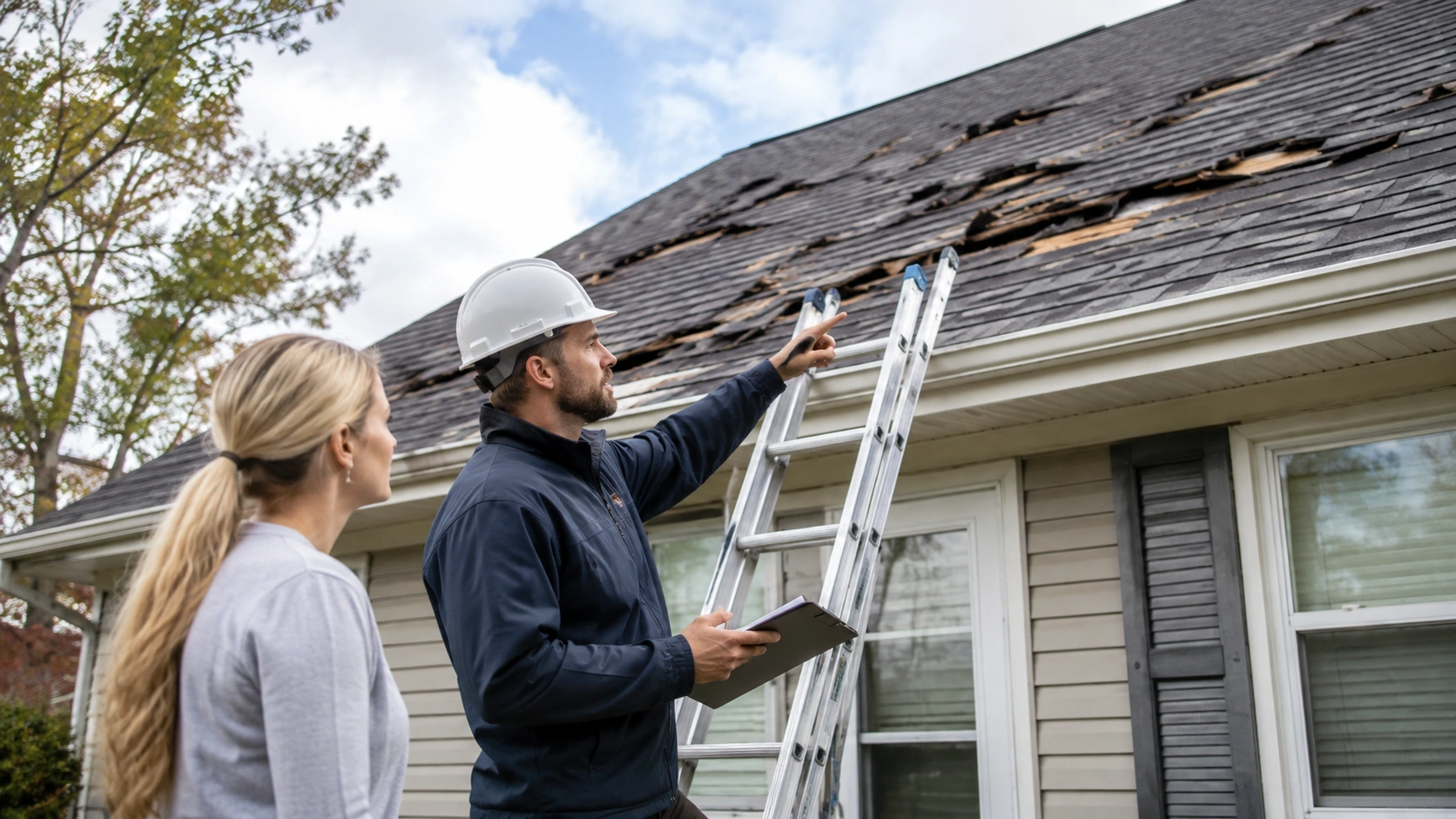
A contractor who has inspected the property can identify roof sections, explain measurements, and show documented conditions. Ask the adjuster or carrier whether contractor attendance is permitted and coordinate the appointment in advance.
The contractor should focus on construction facts rather than arguing policy interpretation. The adjuster may accept, question, or independently evaluate the contractor’s findings.
What the Adjuster May Inspect
The inspection may include roof surfaces, exterior elevations, gutters, attic areas, ceilings, interior finishes, detached structures, and damaged personal property. The scope depends on the reported loss and the carrier’s procedures.
There is no single inspection length that applies to every claim. Roof size, access, weather, damage complexity, interior moisture, and the number of affected structures can all change how long the visit takes.
Questions Worth Asking
Ask practical questions that clarify the next step:
- Do you need any additional photographs, estimates, or receipts?
- Which areas were included in the inspection?
- When should I expect the written scope or decision?
- How will depreciation be handled?
- What should I do if hidden damage is found during repairs?
- Is there a process for submitting supplemental documentation?
Avoid relying only on verbal comments made at the property. Wait for the carrier’s written coverage decision and estimate.
Roof Repair or Replacement After the Claim
A roof insurance claim may result in a localized repair, replacement of one or more slopes, or a full replacement. The proper scope depends on the physical damage, repairability, policy terms, local code requirements, and the availability of compatible materials.

When a Localized Repair May Be Reasonable
Repair may be appropriate when damage is limited, the surrounding roofing remains serviceable, compatible materials are available, and the repair can restore the roof’s weather resistance. Examples include replacing a small group of wind-damaged shingles, repairing flashing, or replacing a damaged vent.
A lower repair price does not automatically make repair the correct choice. The contractor should consider whether nearby shingles can be lifted without breaking, whether the underlayment or decking is damaged, and whether the repaired section can be integrated properly.
When Replacement May Be Considered
Replacement may be recommended when damage is widespread, multiple slopes are affected, the roof covering is brittle, matching materials are unavailable, repair would disturb surrounding areas, or code requirements affect the work. The insurer may still limit payment to the covered damage described in the policy.
Homeowners should not assume that unavailable matching shingles automatically require payment for a complete roof. North Carolina’s Department of Insurance states that a homeowners policy generally covers direct physical damage and does not automatically require replacement of the entire roof solely because the original shingles cannot be matched. Codes and Concealed Damage
Code-related work may include decking replacement, flashing details, ventilation changes, protective underlayment, fastening requirements, or other items required by the local authority. Coverage for code upgrades depends on policy terms, including any ordinance or law coverage.
Hidden damage may appear after shingles or other roof materials are removed. The contractor should photograph concealed conditions before replacing them and notify the homeowner and insurer when the newly discovered work may affect the claim.
Ask how supplemental estimates should be submitted before authorizing major changes.
Understand the Payment Sequence
The first payment may not be the final claim amount. South Carolina’s Department of Insurance notes that an initial check may be an advance rather than a final settlement, and additional damage may sometimes be submitted after discovery. ent-cost coverage applies, recoverable depreciation may be released after repairs are completed and required documents are provided. Confirm the carrier’s process before work begins so invoices, proof of payment, and completion photographs are collected correctly.
Interior Repairs After a Roof Leak
Roof damage sometimes affects more than the exterior surface. Water entering through missing shingles, damaged flashing, or roof openings can stain ceilings, soften wallboard, and damage interior finishes. Once the leak has been repaired and the area is completely dry, Drywall Services may be needed to replace damaged material, followed by professional Painting Services to restore the affected room.
When water enters near a bathroom, homeowners should separate necessary storm repairs from optional Bathroom Remodelling work. The insurance carrier may evaluate damage caused by the covered event, while unrelated upgrades or design changes are generally handled as a separate home improvement project.
Common Roof Insurance Claim Mistakes
A claim can become harder to evaluate when the homeowner waits, loses evidence, authorizes extensive work too early, or assumes the contractor and insurer have identical roles.
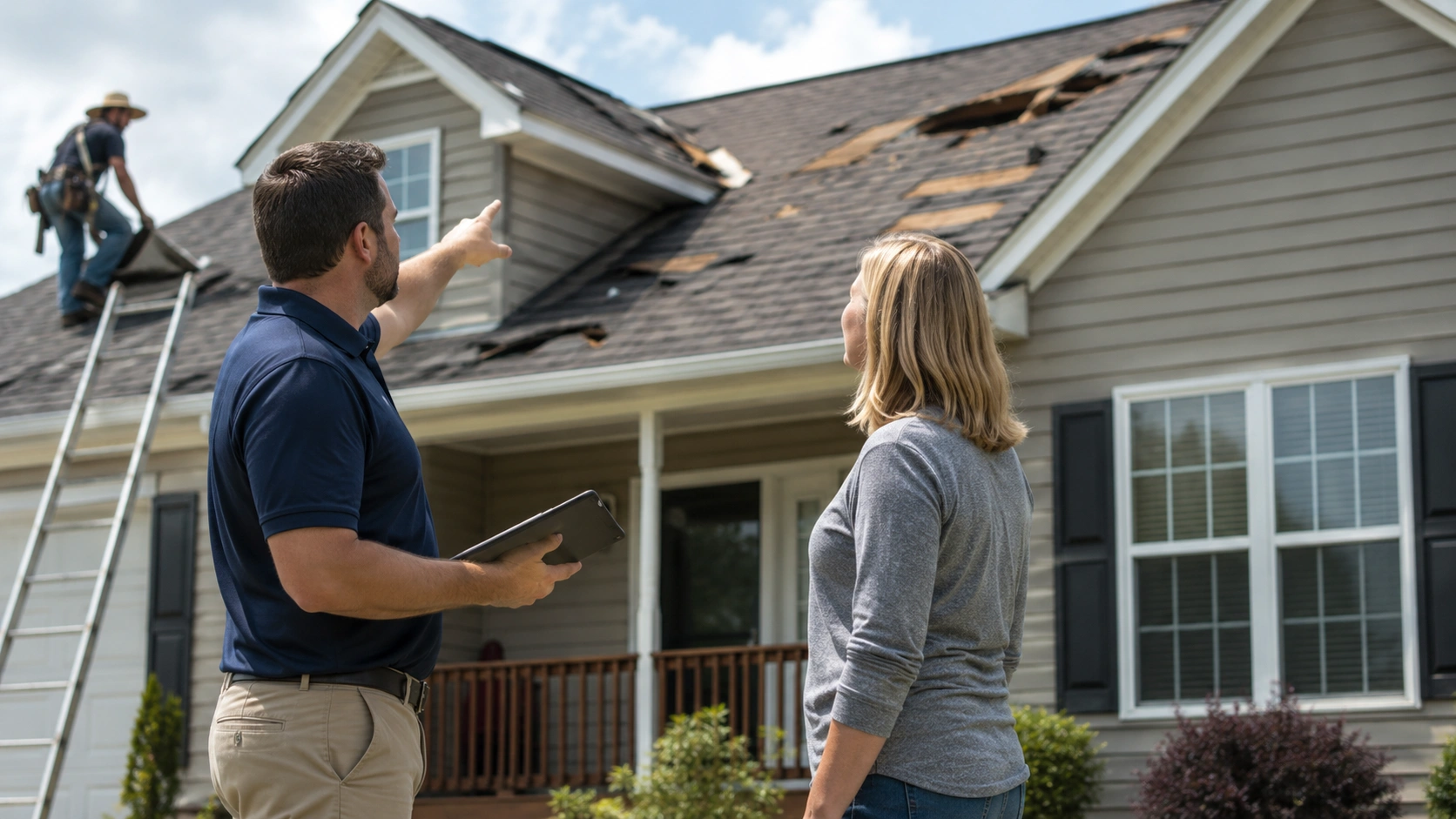
Waiting Too Long to Report or Inspect Damage
Storm damage is not always visible immediately, but unexplained delays can create questions about when the loss occurred or whether later weather contributed. Report known damage according to the policy and arrange an inspection when signs of damage appear.
Do not assume that a lack of interior leaking means the roof is unharmed. Lifted shingles, damaged flashing, and hail impacts may exist before water becomes visible indoors.
Discarding Damaged Materials
Removed shingles, broken vents, damaged flashing, and fallen components may support the claim. Photograph them in place, save representative samples when practical, and ask the carrier before disposal if the materials are significant to the inspection.
Safety and sanitation still come first. Do not retain wet, contaminated, sharp, or hazardous debris inside the home merely to preserve evidence. Detailed photographs may be the safer record.
Completing Permanent Repairs Before Inspection
Emergency work may be necessary, but replacing the roof before the insurer can inspect may remove evidence and create disagreement about the original condition. South Carolina’s disaster guidance advises homeowners not to contract for repairs beyond temporary work before agreement with the adjuster or agent. e permanent work is necessary for safety, document the reason, notify the carrier, photograph every stage, and preserve relevant materials where practical.
Providing Incomplete Documentation
A few distant roof photographs rarely tell the full story. Pair wide views with close views, label locations, include interior and exterior evidence, and maintain a timeline. Send the adjuster a clear packet rather than scattered text messages and unnamed files.
Assuming Every Storm-Related Problem Is Covered
A storm may create covered damage, uncover excluded wear, and cause flood damage that belongs under another policy, all at the same property. Ask the insurer to explain each decision in writing rather than treating the claim as a single yes-or-no question.
Choosing a Contractor Based Only on Price
A low estimate may omit flashing, ventilation, disposal, permits, decking allowances, code-related work, or manufacturer requirements. Compare scope, materials, insurance, licensing, workmanship terms, and communication practices, not just the total price.
Be cautious with door-to-door contractors who demand immediate signatures, offer to absorb the deductible, request large cash payments, or promise guaranteed insurance approval. North Carolina’s Department of Insurance warns that storm-related repair scams often increase after major weather events.
When to Request Roof Insurance Claim Assistance
Blue Rock Roofing & Construction can inspect the roof, document visible storm damage, prepare a roofing estimate, and explain the repair options available for the property. Depending on the condition of the home, the project may involve Roofing Services, Gutter Services, interior drywall and painting repairs, or related exterior work.
Homeowners planning improvements beyond the covered storm repairs can also discuss Custom Decks and Covered Porch and Pergola Installation as separate projects. Keeping insurance-related repairs and optional upgrades clearly separated makes estimates, contracts, and claim documentation easier to understand.
Professional assistance may be useful when the source of damage is unclear, the roof cannot be inspected safely, the insurer requests a detailed estimate, or the contractor and adjuster have different repair scopes.
Assistance should improve documentation and communication, not pressure the homeowner into filing a claim that may not be worthwhile.
Blue Rock Roofing & Construction provides roof inspections, storm-damage assessments, photographs, written findings, and roofing estimates for homeowners in Fort Mill, Charlotte, and surrounding Carolina communities. The company also works alongside homeowners during the insurance claim process and can coordinate with the adjuster regarding the roof inspection and repair scope. tractor does not replace the insurance company or decide what the policy covers. Blue Rock’s role is to inspect the property, explain observed roofing conditions, prepare repair documentation, and complete approved roofing work under a clear contract.
Consider scheduling an inspection when:
- Shingles or roofing materials are found in the yard
- Hail or high winds affected the neighborhood
- Water stains appear after a storm
- Gutters, vents, siding, or soft metals show impact marks
- A branch or tree contacted the roof
- The insurer requests a contractor estimate
- The adjuster’s scope does not address visible construction conditions
- Hidden damage appears after roofing materials are removed
The most useful first step is an inspection that gives a straight answer about the roof’s condition. Not every storm mark requires a claim or a full replacement.
Frequently Asked Questions
How do roof insurance claims work?
The homeowner reports a loss, provides documentation, protects the property from further damage, and allows the insurer to inspect. The carrier then applies the policy terms, deductible, exclusions, depreciation, and coverage limits to the documented damage.
Approved work may be paid in one or more stages depending on the policy and repair process.
How long do I have to file a roof damage claim?
The deadline depends on the policy, the type of loss, and applicable law. Some policies require prompt notice rather than giving a simple universal number of days.
Review the claim conditions and contact the insurer as soon as storm damage is discovered.
Should I call a roofer or the insurance company first?
Call emergency help first when the structure is unsafe or water is entering rapidly. For non-emergency conditions, a professional roof inspection can help determine whether visible damage exists before the claim is reported.
Once known storm damage is identified, notify the insurer promptly and follow the policy’s instructions.
Can I repair the roof before the adjuster visits?
Temporary repairs are often appropriate when needed to prevent further damage. Photograph the original condition, keep receipts, and notify the carrier.
Avoid permanent replacement before inspection unless waiting would create a serious safety or property risk.
Does homeowners insurance cover roof leaks?
Coverage depends on why the roof leaked. Water entering through sudden storm damage may be covered, while leaks caused by wear, faulty maintenance, long-term deterioration, or excluded water sources may not be.
The insurer will investigate the cause and apply the policy terms.
Will insurance pay for an entire roof replacement?
It may when covered damage is widespread and replacement is required under the policy and repair conditions. In other cases, the insurer may pay for a localized repair or only the directly damaged area.
Roof age, settlement method, matching materials, code requirements, and policy endorsements can affect the outcome.
Can a roofing contractor meet with the adjuster?
Often, yes, when the appointment is coordinated with the homeowner and insurer. The contractor can identify roof areas, explain measurements, show photographs, and discuss repair methods.
The adjuster still evaluates the loss for the insurance company.
What happens when roof damage is discovered late?
Report it when discovered and explain why it was not visible earlier. Provide photographs, moisture records, inspection findings, and any evidence connecting the condition to the reported storm.
The insurer may investigate the date and cause more closely, and coverage will depend on the policy and available evidence.
A well-organized roof insurance claim begins with safety, documentation, and a careful inspection. Protect the home, preserve the evidence, read the policy, and keep important communication in writing.
When professional roofing input is needed, choose a contractor who explains the physical condition clearly without promising an insurance outcome.
Leave a Reply