Storm damage can leave homeowners wondering whether they are dealing with a few missing shingles or a much larger roofing problem. The first hours after severe weather matter, but rushing onto the roof or beginning major repairs can create additional problems.
If you suspect you need storm damage roof repair, start by protecting people first, documenting what happened, preventing additional water intrusion when it is safe to do so, and arranging a professional roof inspection. Damage caused by wind, hail, fallen branches, and wind-driven rain is not always obvious from the ground.
Here is how to handle the situation in a practical order.
Make Safety the First Priority After the Storm
Before looking closely at the roof, make sure the property is safe to approach.
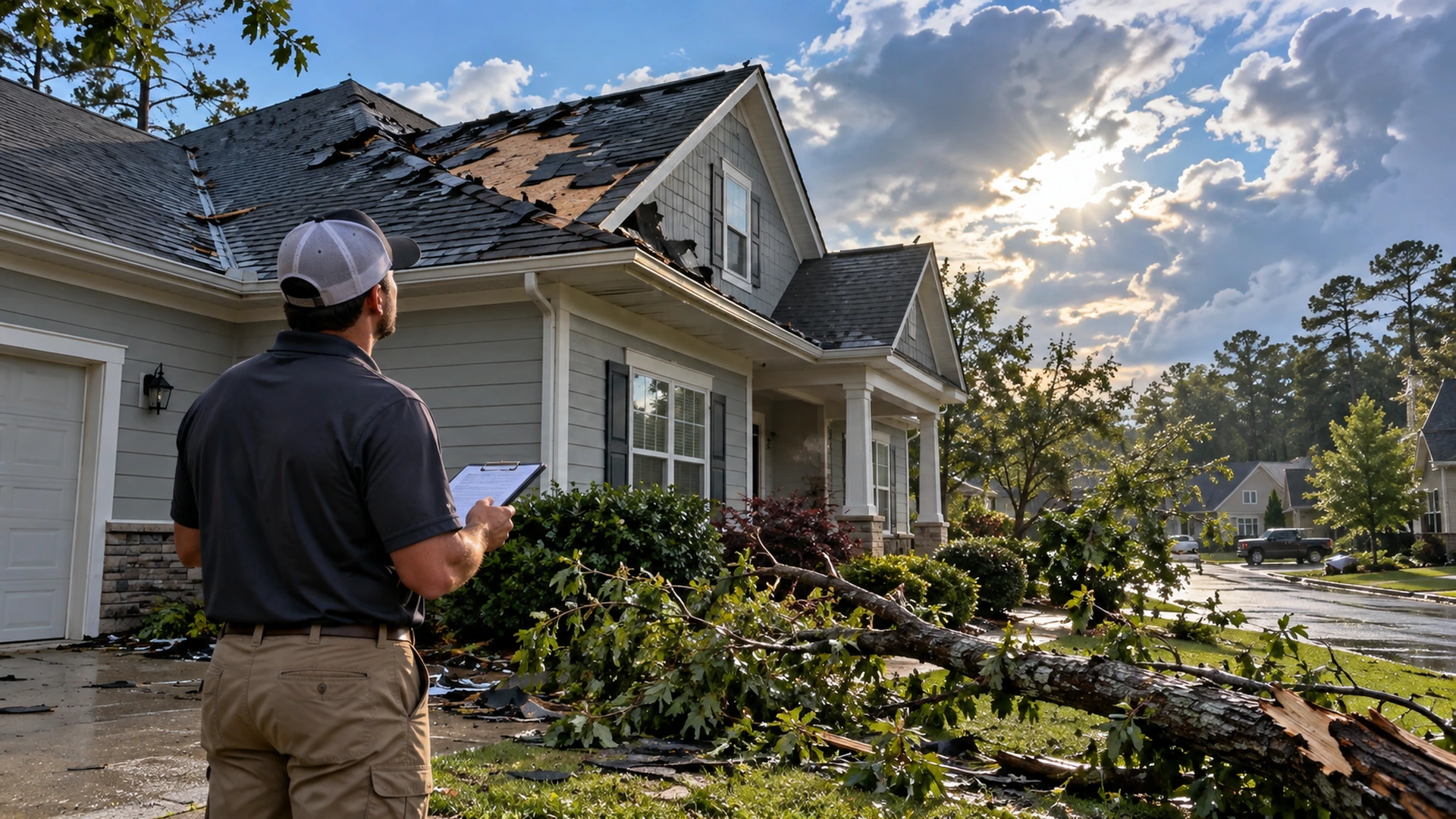
Storms can leave behind hazards that have nothing to do with the shingles themselves. Fallen electrical lines, unstable tree limbs, broken glass, standing water, damaged ceilings, and weakened structural components can make even a familiar property dangerous.
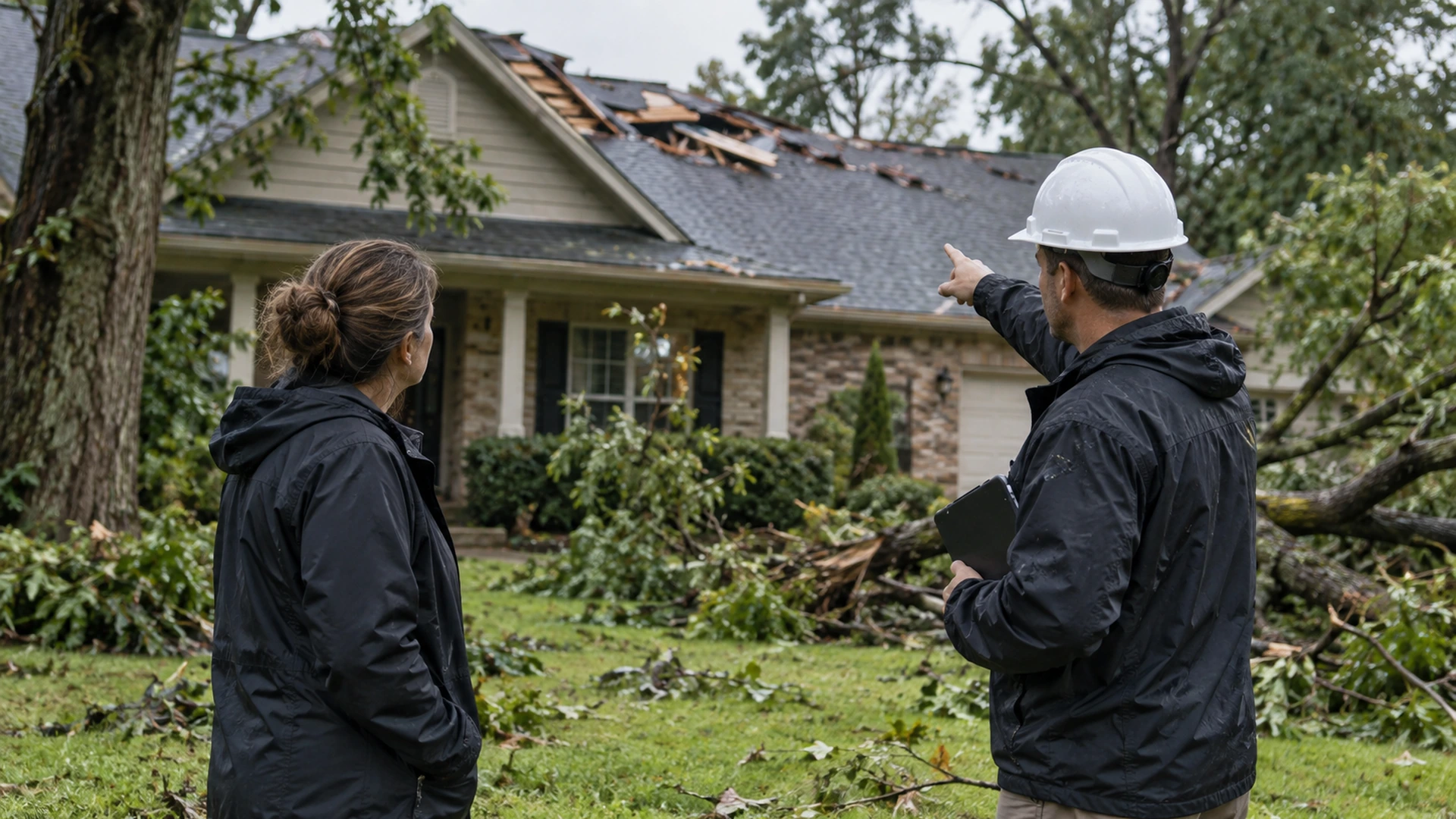
Avoid climbing onto the roof yourself, particularly when it is wet, steep, covered with loose materials, or visibly damaged. A roofing surface that looks stable from below may have weakened decking underneath.
If you notice serious structural movement, sagging sections, electrical hazards, or other conditions that make the home unsafe, stay clear of the affected area and contact the appropriate emergency or utility service.
North Carolina’s Department of Insurance similarly recommends checking for safety concerns before beginning a damage assessment.
Look for Storm Damage From a Safe Location
Once immediate safety concerns have been addressed, inspect what you can see without getting onto the roof.
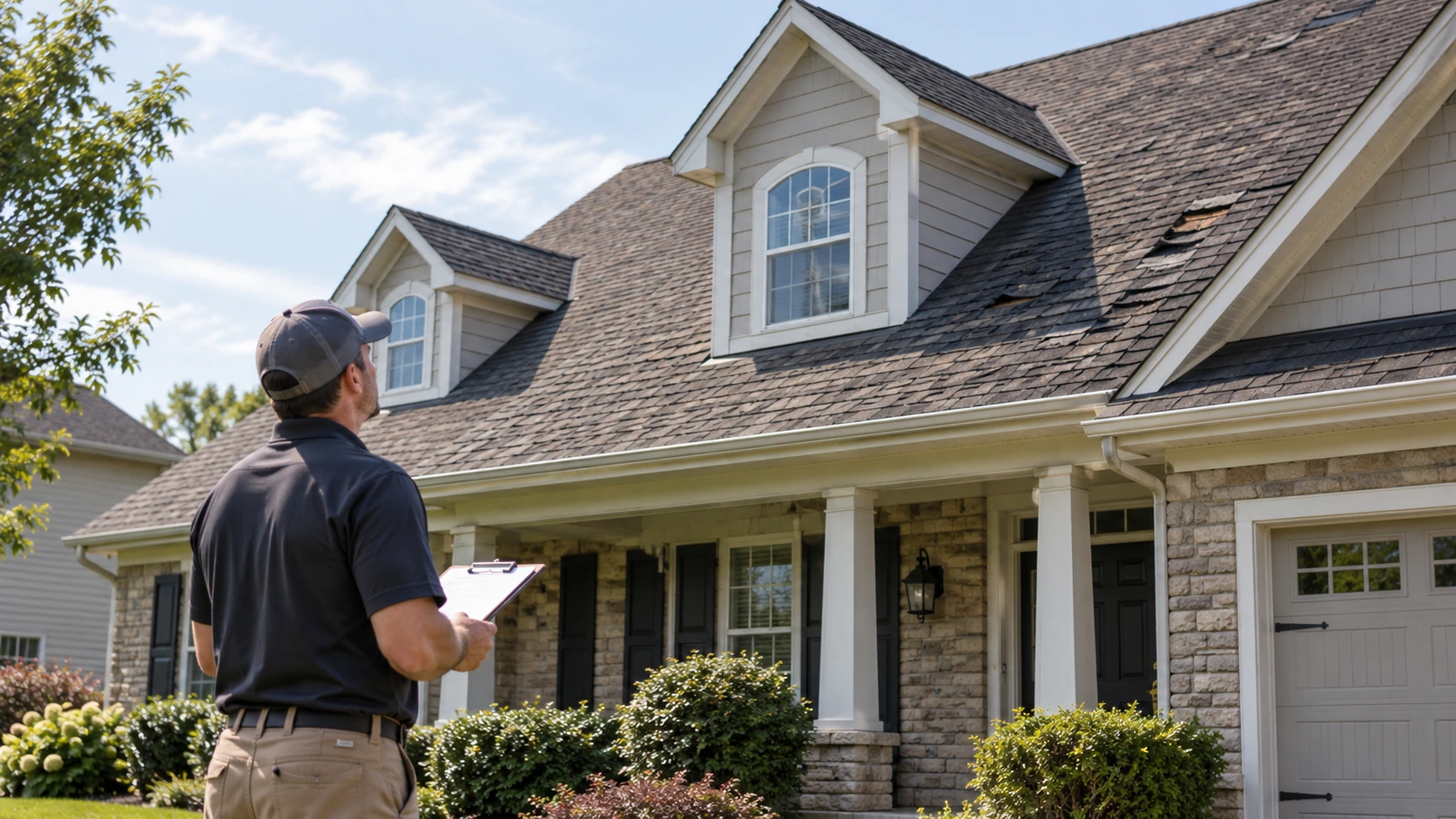
Walk around the property and look at each side of the home. Binoculars or a phone camera with zoom can help you spot problems that are difficult to see from ground level.
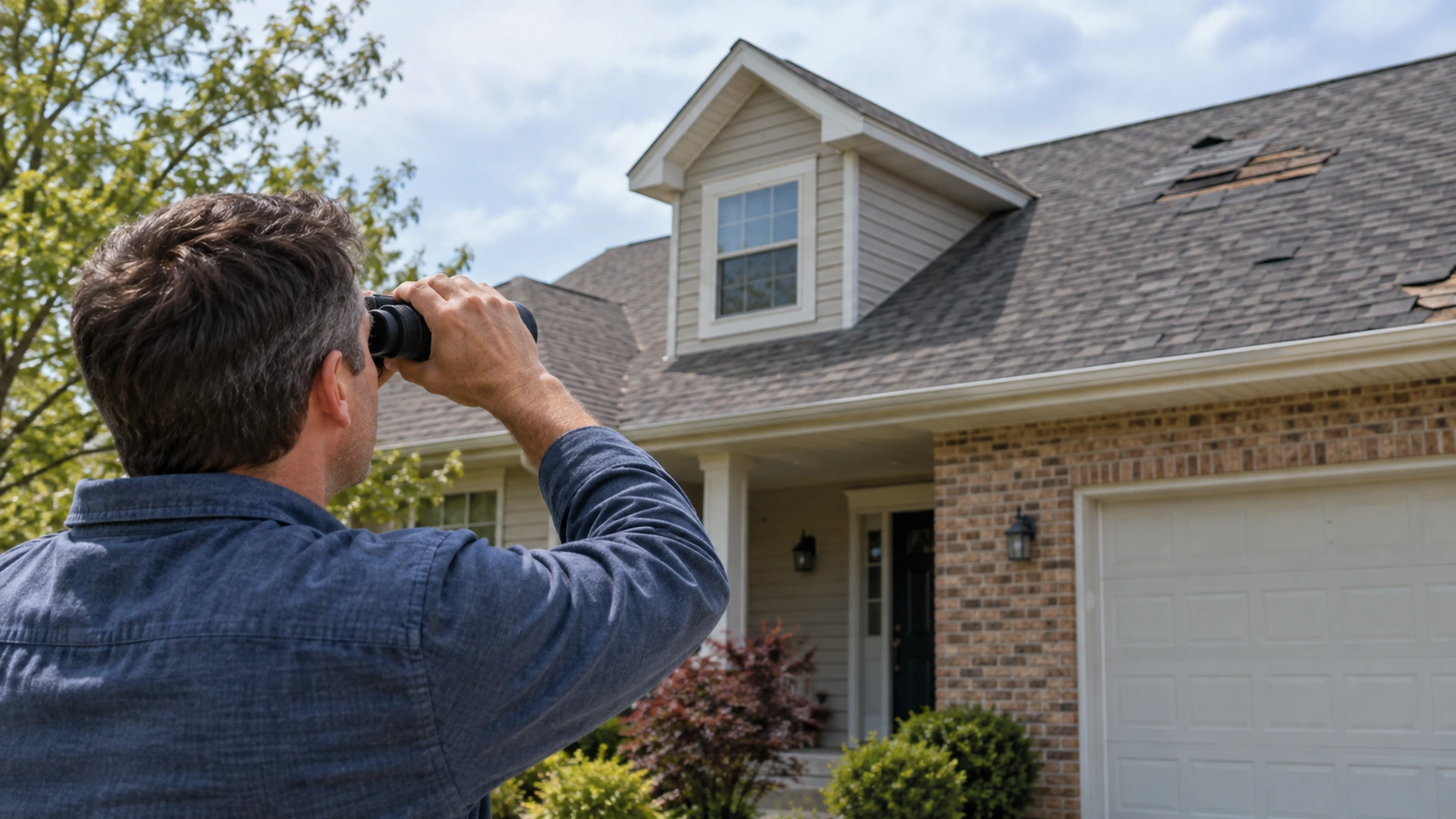
Common warning signs include:
- Missing, lifted, curled, or displaced shingles
- Shingle pieces around the yard
- Dented or damaged metal roofing components
- Bent or detached flashing
- Damage around vents, chimneys, and roof penetrations
- Broken gutters or downspouts
- Tree limbs resting on the roof
- Sections of roofing that appear uneven or sagging
- Water stains on ceilings or walls
- Moisture in the attic
- New leaks following the storm
Hail can be especially difficult to evaluate without professional training. Some impacts may affect shingles without immediately creating an obvious opening.
A professional roof inspection can help determine whether visible symptoms are isolated or part of a wider roofing problem.
Document the Damage Before Repairs Begin
Good documentation creates a record of what the property looked like immediately after the storm.
Take clear photographs and videos from safe locations. Capture both wide views and closer images when possible. Include the roof, gutters, siding, fallen branches, damaged outdoor structures, interior water stains, and any belongings affected by water intrusion.
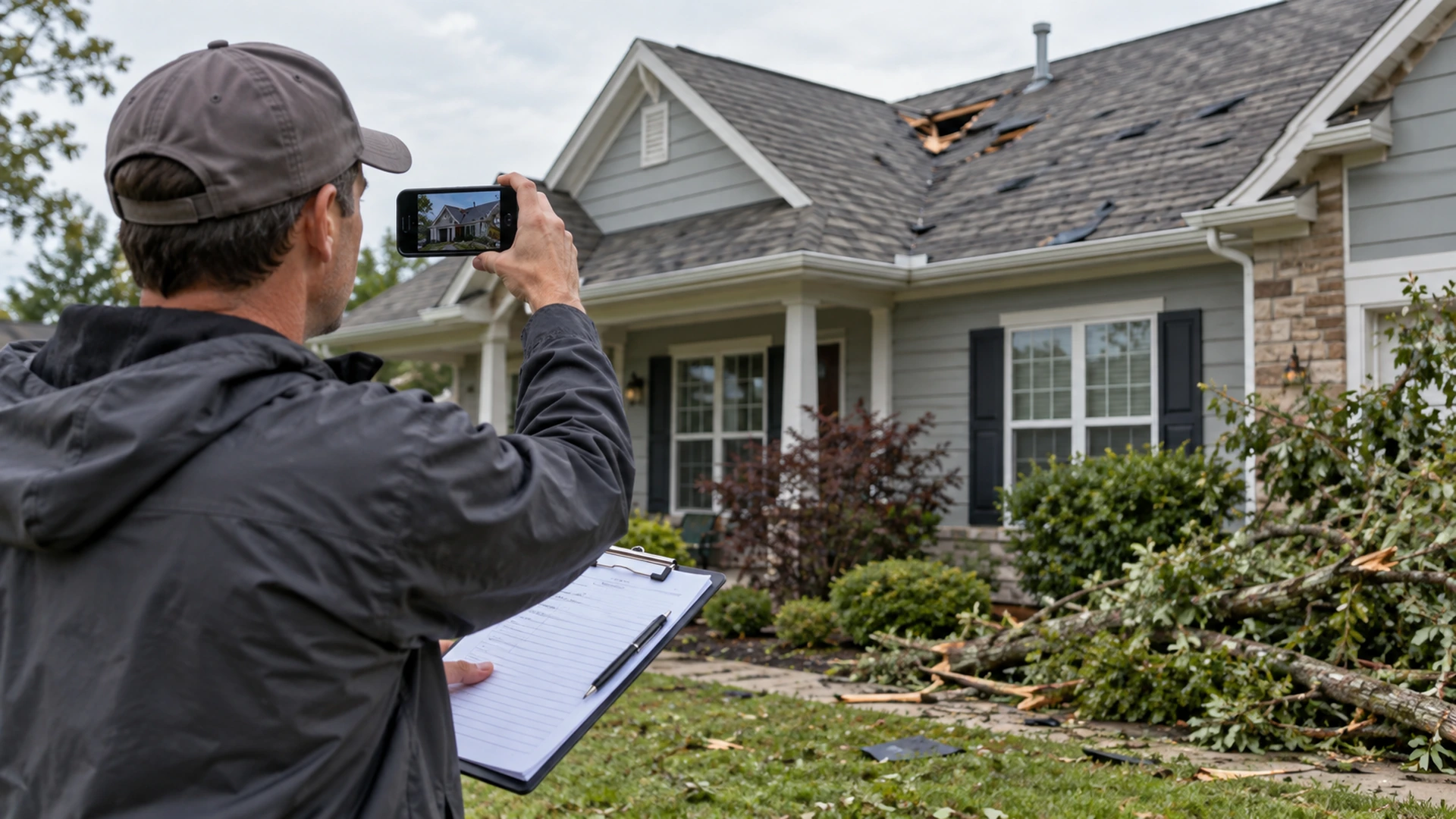
It also helps to write down:
- Approximately when the storm occurred
- When you first noticed the damage
- Where leaks or stains appeared
- Which rooms were affected
- Temporary steps taken to limit additional damage
- Receipts for materials or emergency work
The North Carolina Department of Insurance recommends making a list of damage and taking clear photographs before temporary repairs are performed.
This documentation may become useful when speaking with your contractor and insurance company.
Prevent Additional Water Damage Without Taking Unnecessary Risks
A damaged roofing system can allow a relatively small opening to become a much larger interior problem.
Water entering through displaced shingles or damaged flashing may reach insulation, drywall, ceilings, electrical components, and other parts of the building.
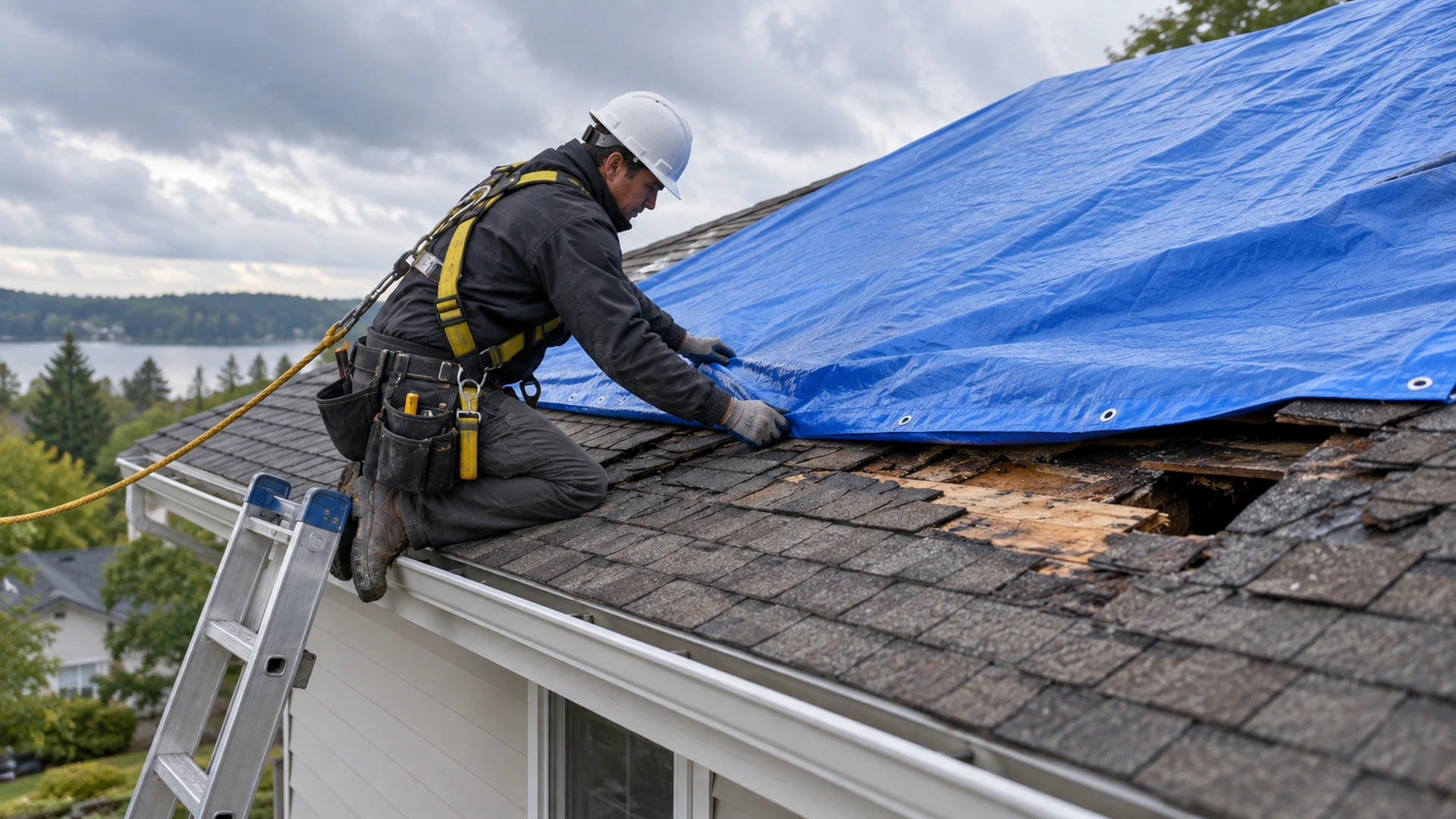
Temporary protection can sometimes reduce further damage while permanent repairs are being planned. The North Carolina Department of Insurance specifically notes that reasonable temporary measures, such as covering a damaged roof to prevent additional water intrusion, may be appropriate. Homeowners should also keep receipts associated with these measures.
That does not mean homeowners should climb onto a damaged roof with a tarp.
If accessing the roof would be unsafe, contact a contractor that provides emergency roof repair. Temporary protection should reduce risk, not introduce another one.
Arrange a Professional Storm Damage Roof Inspection
Visible damage tells only part of the story.
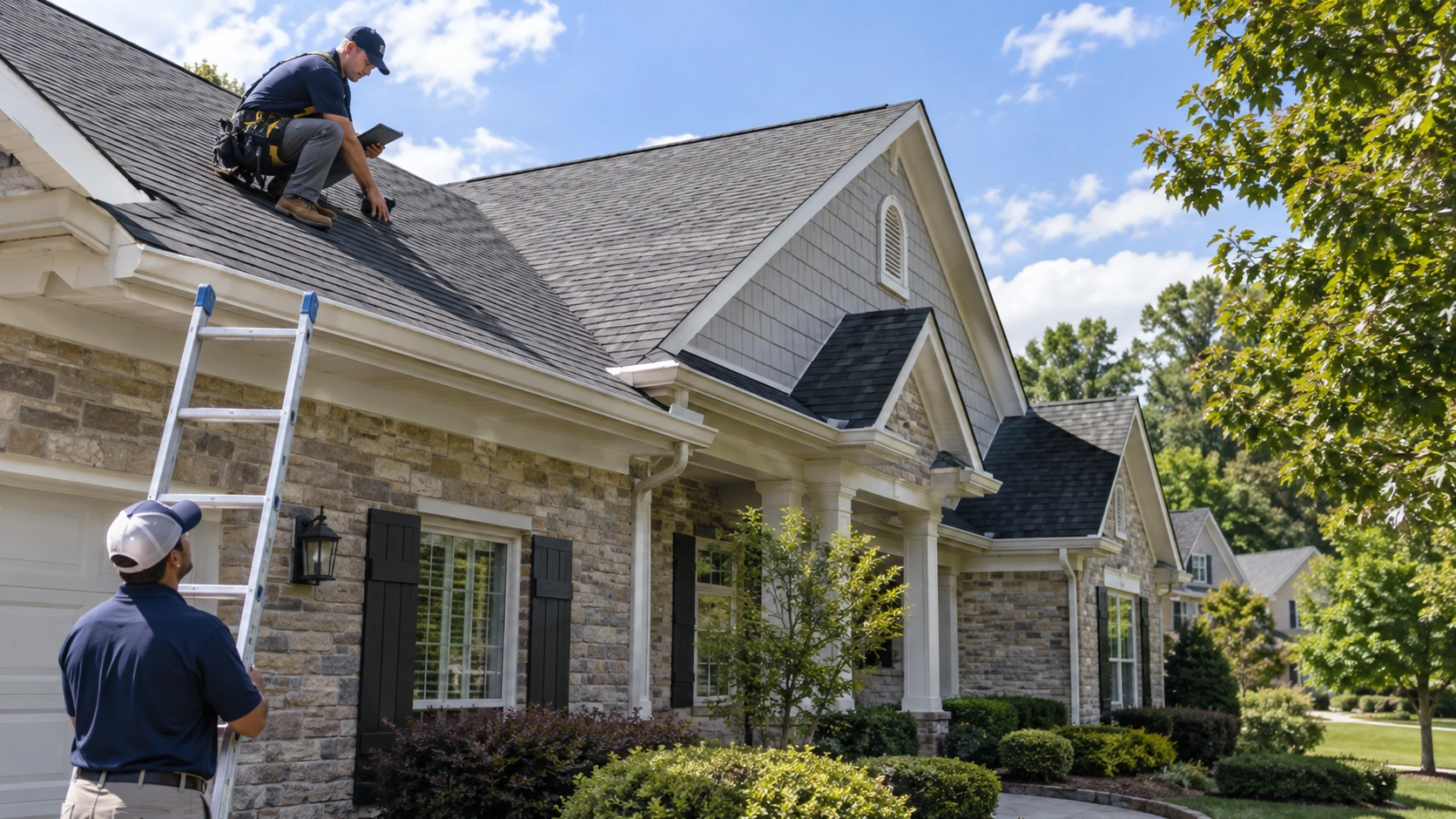
A roofing contractor can inspect areas that homeowners may not be able to assess safely and determine how the roofing system performed during the storm.
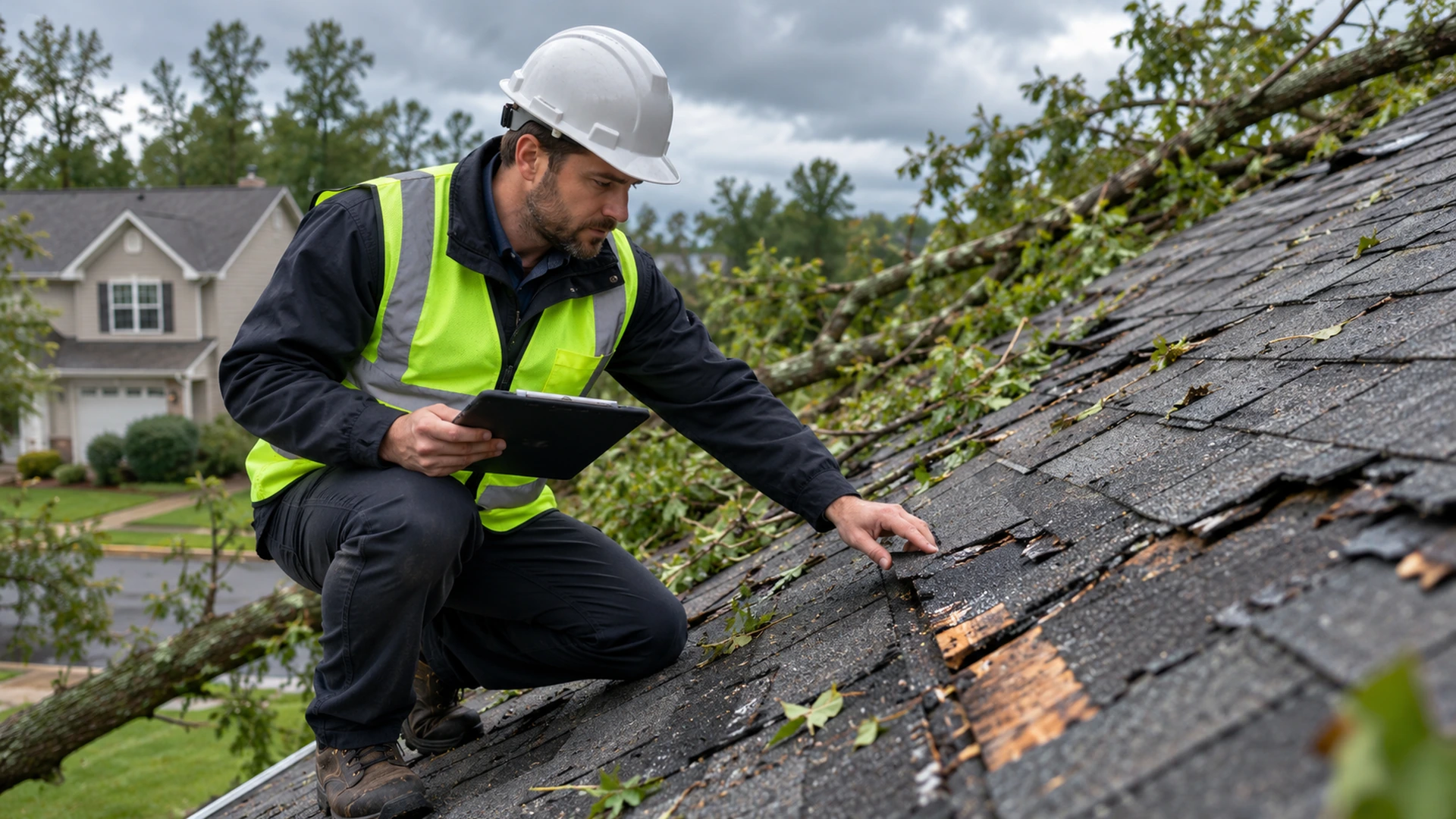
A storm inspection may examine:
Shingles and Roofing Materials
Wind can loosen shingles without completely removing them. Hail impacts may also affect the protective surface of roofing materials.
Flashing and Roof Penetrations
Areas around chimneys, valleys, vents, skylights, and other penetrations often deserve close attention because compromised flashing can create paths for water.
Roof Deck and Structural Areas
If moisture has entered beneath the roofing material, the contractor may need to determine whether the roof decking or supporting components have been affected.
Gutters and Drainage
Damaged gutters and downspouts can interfere with normal drainage and allow water to collect where it should not.
Homeowners dealing specifically with weather-related damage can also review Blue Rock CLT’s storm damage roofing services for information about professional assessment and repair options.
Understand What Different Types of Storm Damage Can Look Like
Not every storm affects a roof in the same way. Understanding the likely source of the damage can make the inspection findings easier to understand.
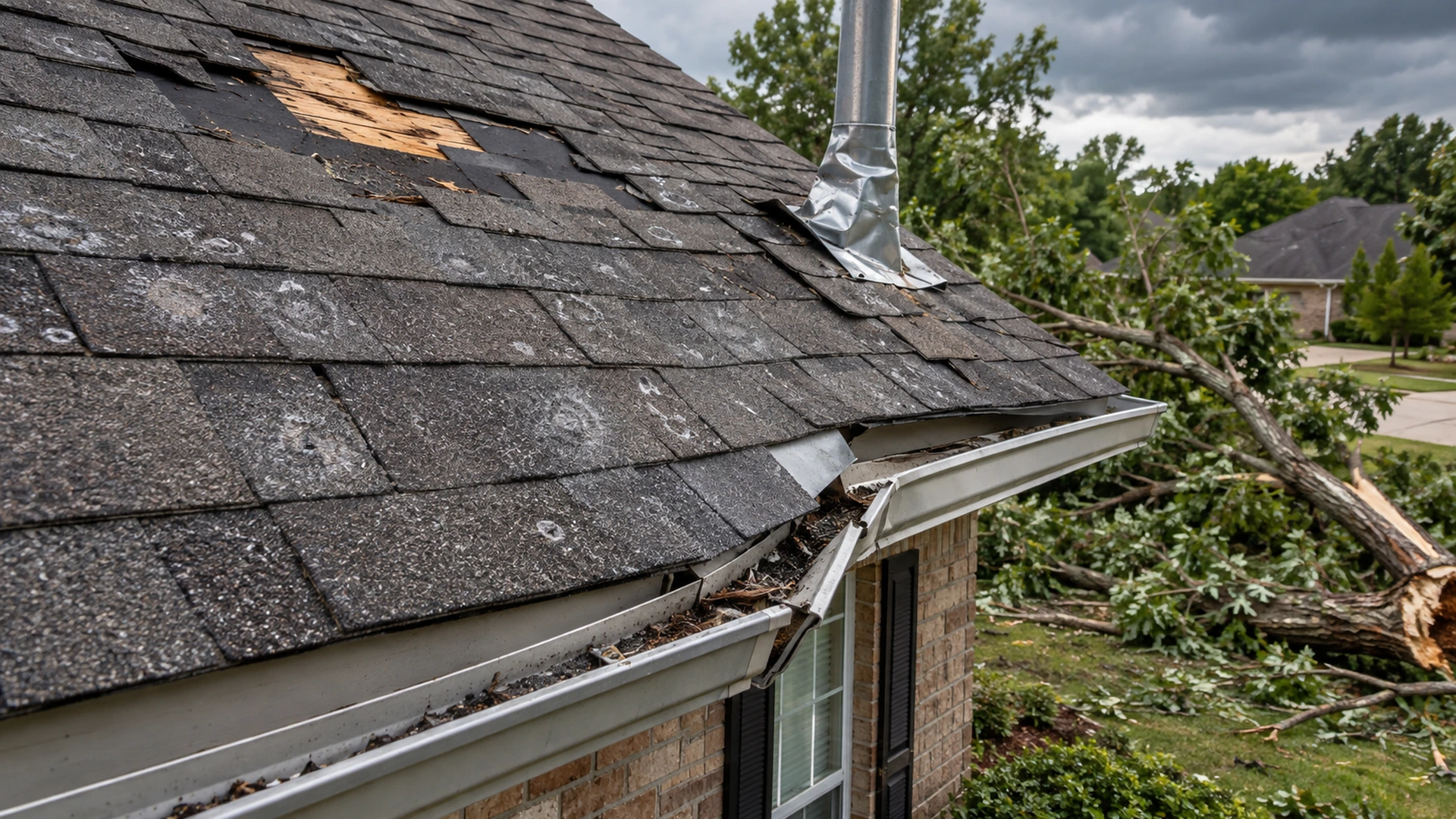
Wind Damage
Strong winds can lift roofing materials, loosen fasteners, damage flashing, or remove shingles entirely. Problems sometimes occur along roof edges, ridges, and areas where wind pressure is concentrated.
A lifted shingle does not necessarily disappear. It may settle back into place while the seal underneath has already been compromised.
Hail Damage
Hail can affect shingles, vents, flashing, gutters, and other exterior components. The appearance varies according to the roofing material, hail characteristics, and condition of the roof.
Because hail damage can be subtle, relying only on what can be seen from the driveway may not provide a complete picture.
Falling Debris
Tree branches and other debris can puncture roofing materials or damage the structure underneath.
Even when a branch does not penetrate the roof, the impact may affect shingles, flashing, decking, or gutters.
Heavy Rain
Rain often exposes weaknesses that were already developing. Water may enter through damaged flashing, displaced shingles, roof penetrations, or areas affected by wind.
For additional context about how severe weather can affect different parts of a roofing system, see how storm damage can affect your roof and what to do next.
Find Out Whether the Roof Needs Repair or Replacement
Discovering storm damage does not automatically mean the entire roof needs to be replaced.
The appropriate solution depends on what was damaged, how widespread the problem is, the condition of the surrounding roofing materials, and whether the affected sections can be repaired properly.
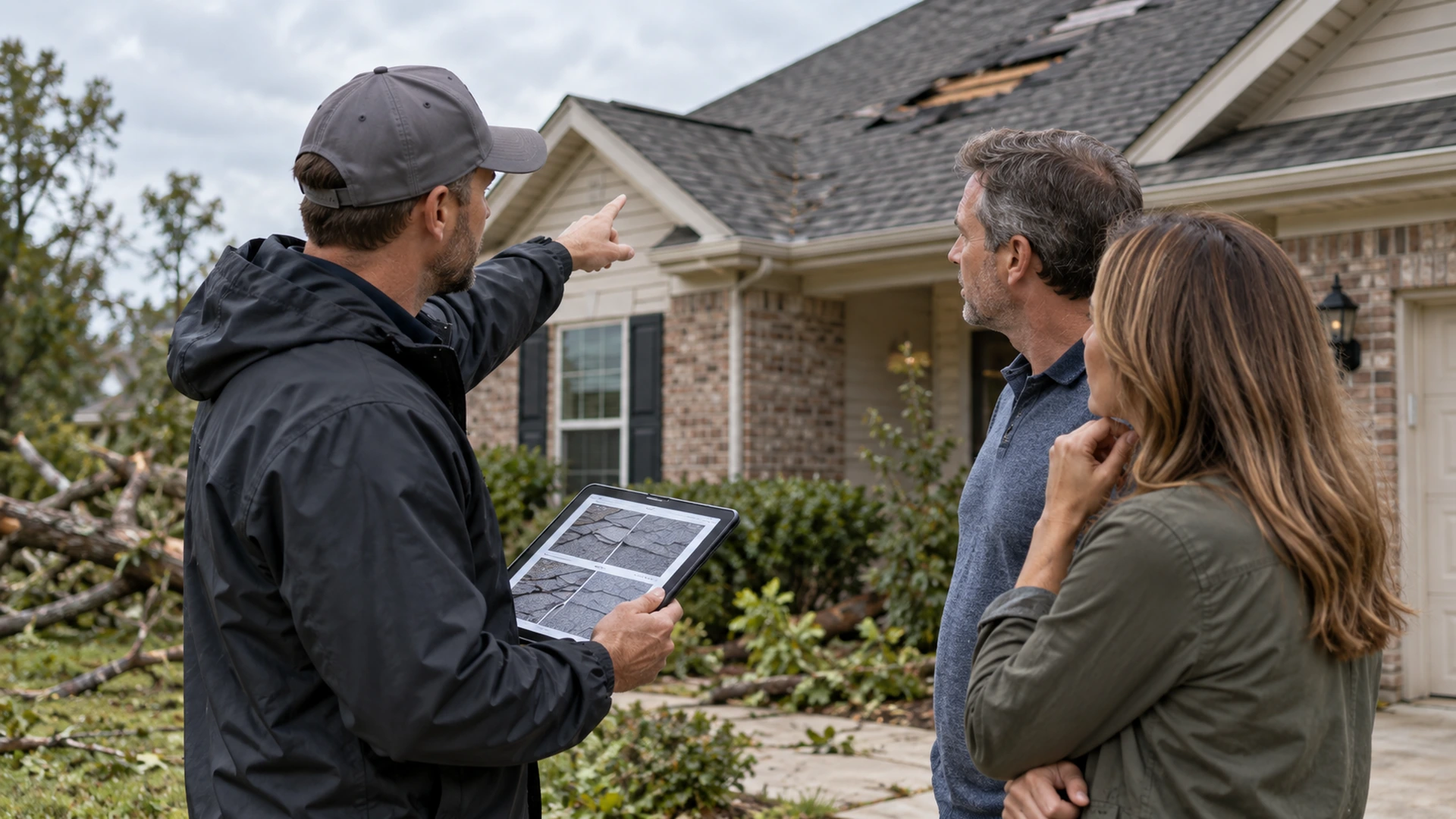
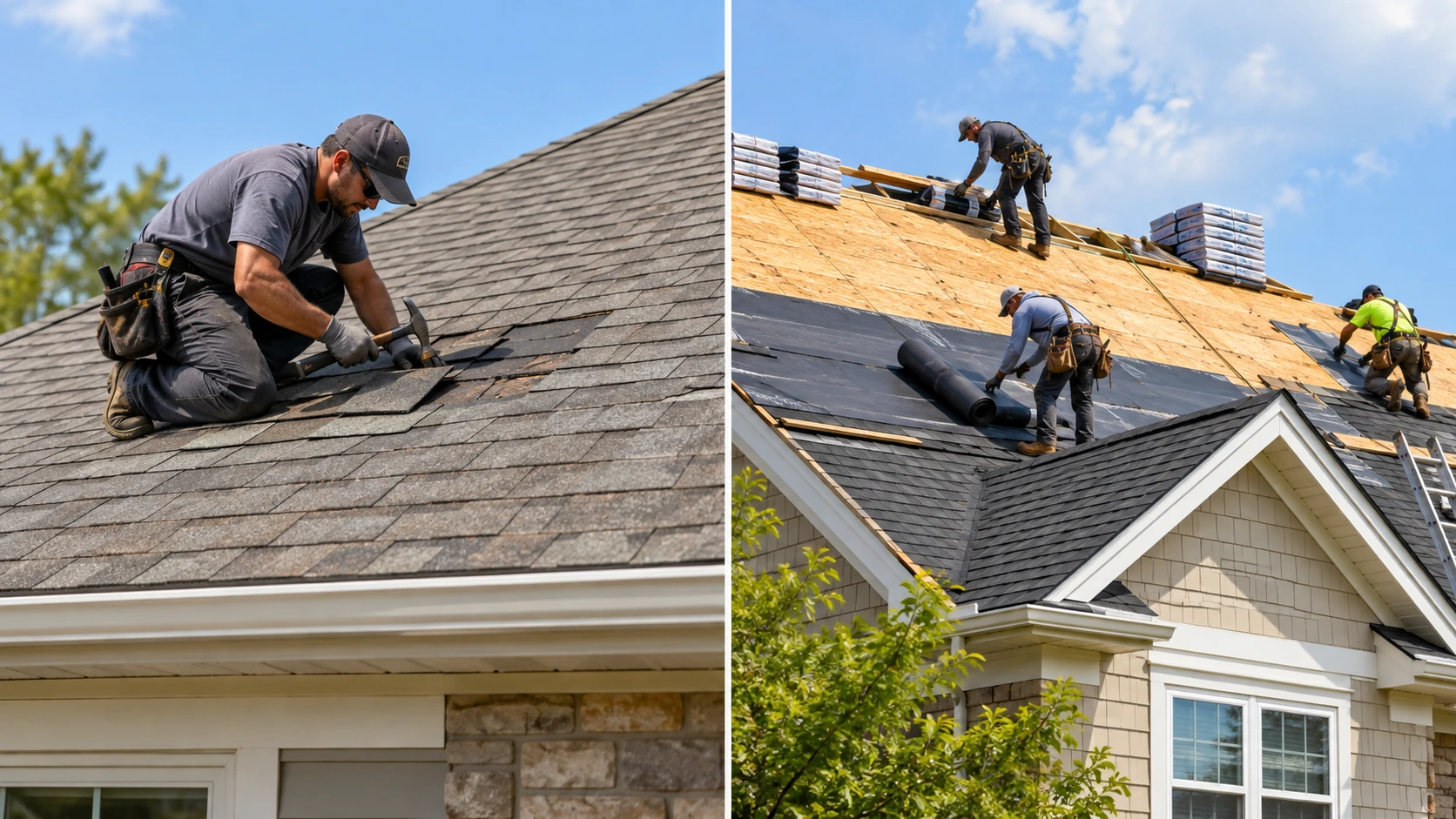
A localized issue, such as a limited group of damaged shingles or flashing, may be suitable for professional roof repair.
More extensive damage may lead to a discussion about roof replacement, particularly when the storm has affected large areas or exposed broader problems with the existing roof.
Imagine two homes on the same street after a windstorm. One loses several shingles from a small section while the rest of the roofing system remains sound. The other has widespread lifting, damaged flashing, moisture intrusion, and weakened materials across several slopes.
Both experienced the same storm, but they may require very different solutions.
The decision should come from the actual condition of the roof rather than assumptions based solely on the severity of the weather.
Our roof repair versus replacement guide explains the factors that can help homeowners understand that decision.
Contact Your Insurance Company When a Claim May Be Needed
Homeowners insurance coverage varies by policy, so storm damage should not automatically be assumed to be covered or excluded.
Review your policy and contact your insurance company or agent when the damage may justify a claim.
The North Carolina Department of Insurance advises homeowners with windstorm or hail losses to report the loss to their insurer, document the damage, make reasonable temporary repairs to prevent further loss, and keep receipts. It also recommends avoiding permanent repairs until the insurance company has had an opportunity to inspect the property and the repair cost has been addressed.
Coverage can depend on the policy. North Carolina regulators note that some policies may exclude certain windstorm or hail coverage, which is why homeowners should review their individual policy with their insurer or agent.
Blue Rock CLT also provides insurance claims assistance for homeowners working through the repair process.
Avoid Permanent Repairs Before the Damage Is Properly Evaluated
Stopping active water intrusion is different from completing a permanent repair.
Temporary work may be necessary to protect the home, but replacing large roof sections before the damage has been inspected can complicate documentation and the insurance process.
North Carolina’s Department of Insurance recommends taking photographs before temporary repairs and avoiding permanent repairs until the insurer has had an opportunity to inspect the property when a claim is involved.
Damaged materials should also not automatically be discarded when they may be relevant to the claim. Check with your insurance company before disposing of items that could help document the loss.
Once the inspection and insurance requirements have been addressed, permanent roofing work can move forward with much clearer information.
Choose a Roofing Contractor Carefully After a Major Storm
Large storms often create sudden demand for roofing work. Homeowners may receive calls, door knocks, advertisements, or offers from contractors they have never encountered before.
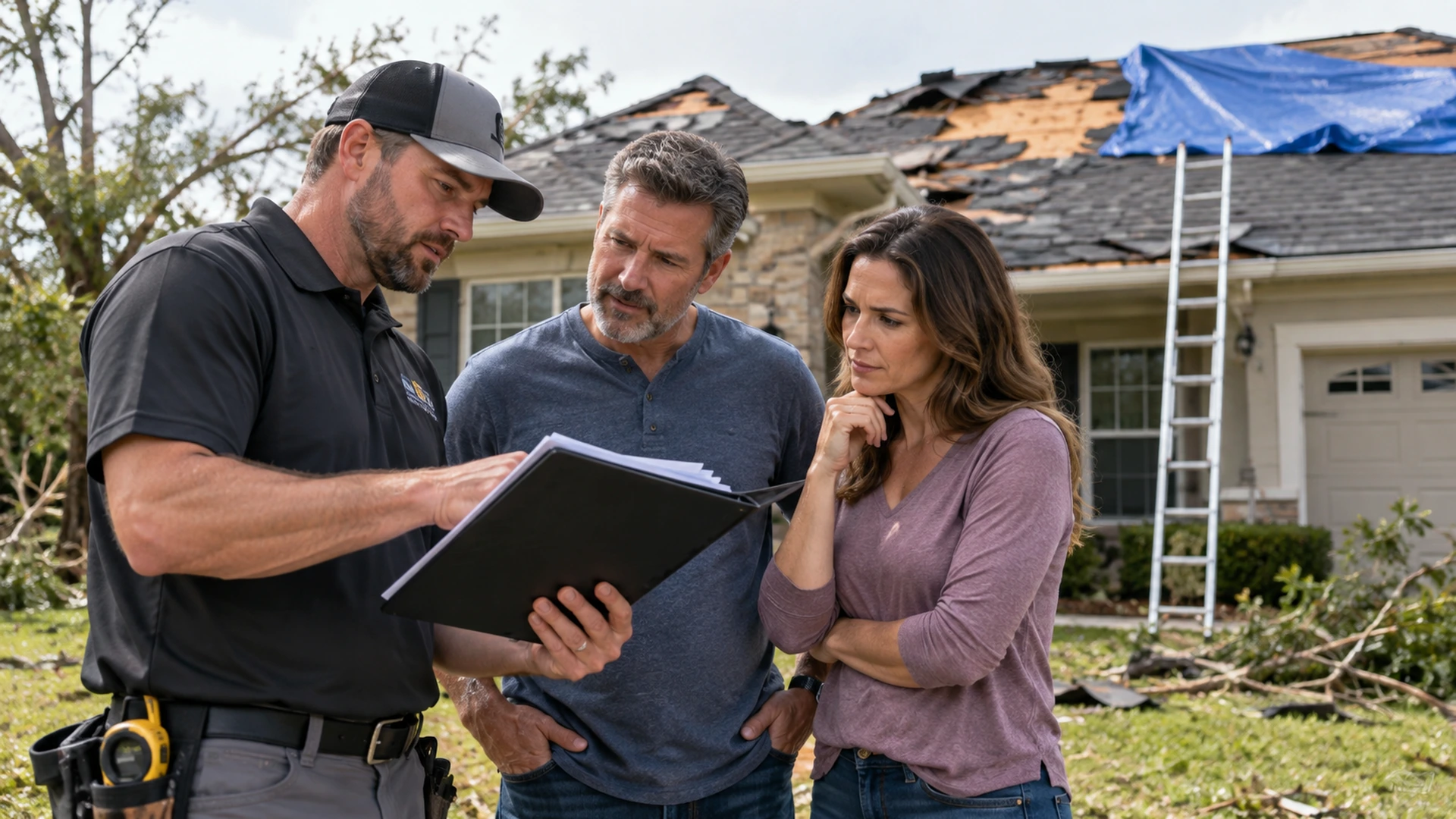
Avoid choosing someone based only on who can arrive first.
Before agreeing to work, consider asking:
- What roofing work is actually being recommended?
- Why is that repair or replacement necessary?
- Will the contractor provide a written scope of work?
- What roofing materials are proposed?
- Who will perform the work?
- How will unexpected damage discovered during the project be handled?
- What warranties apply?
- Is proof of insurance available?
- What payment schedule is expected?
The goal is to understand what is being repaired and why.
If you need additional guidance, the article on choosing the right roofing and home improvement contractor covers practical factors to consider before hiring.
Watch for Interior Problems in the Days Following the Storm
Not every leak becomes visible immediately.
After the initial inspection, continue watching ceilings, walls, attic spaces, and areas around roof penetrations for signs of moisture.
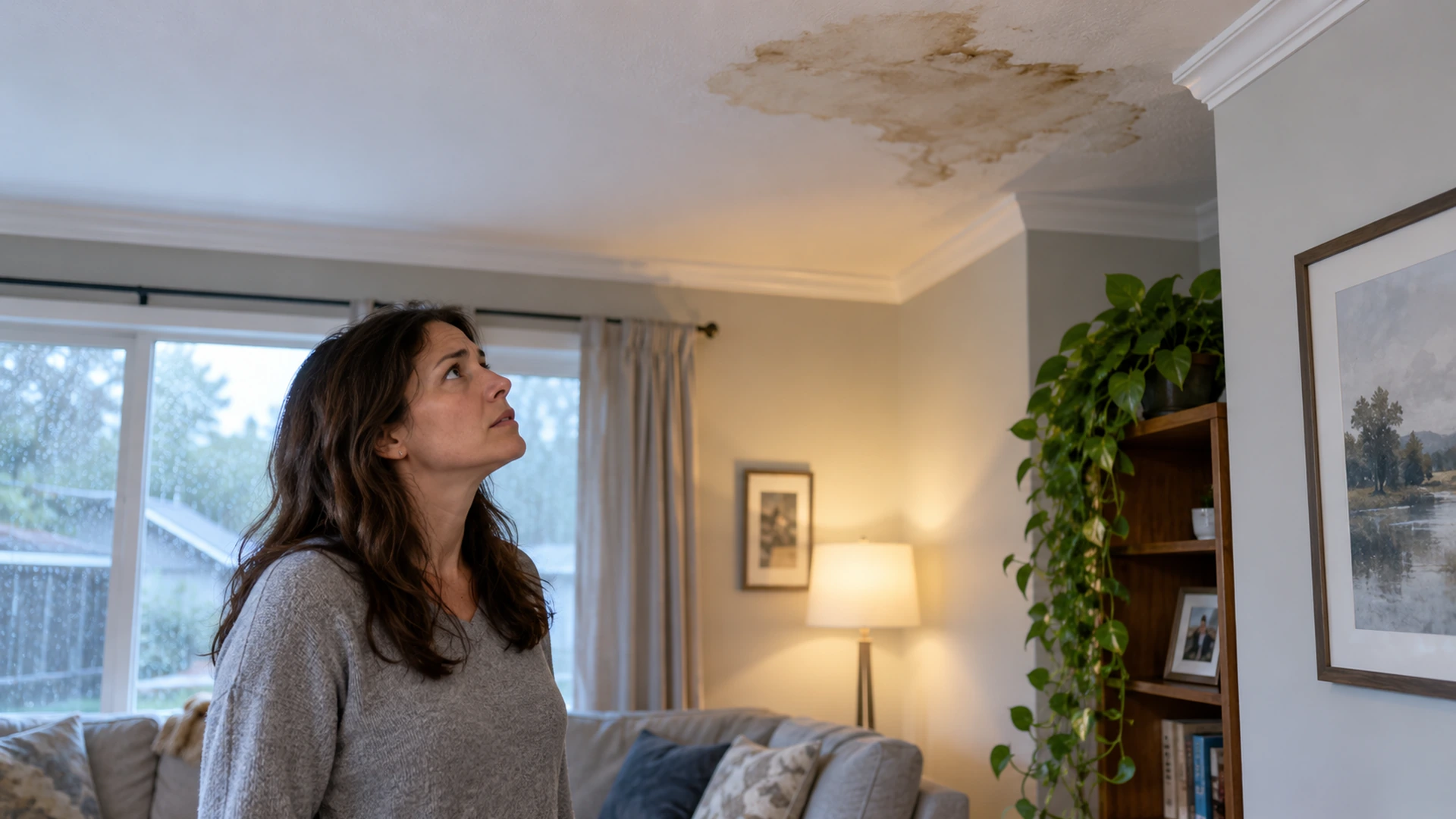
Potential warning signs include:
- New ceiling discoloration
- Damp insulation
- Musty odors
- Peeling paint
- Moisture around vents
- Water appearing after later rainfall
A small stain should not automatically be dismissed because the storm has already passed.
Water sometimes travels along rafters, decking, or other building components before appearing inside the living space. The visible stain may therefore be some distance from the actual roof opening.
If new symptoms develop, inform the contractor so the affected area can be evaluated.
Avoid Common Mistakes After Roof Storm Damage
The period immediately following severe weather can be confusing. A few decisions can make the recovery process more difficult than necessary.
Try to avoid:
- Walking on a wet or damaged roof
- Assuming no visible damage means the roof is fine
- Ignoring a small ceiling stain
- Beginning extensive repairs before documenting damage
- Throwing away damaged materials too quickly
- Hiring a contractor without understanding the proposed work
- Assuming every storm-related issue requires complete replacement
- Assuming insurance coverage without reviewing the actual policy
- Delaying temporary protection when water is actively entering the home
A careful inspection allows decisions to be based on the condition of the roofing system rather than fear or guesswork.
Take the Next Step Based on What the Roof Actually Needs
After a storm, the most useful question is not simply, “Is my roof damaged?”
The better question is, “What was damaged, how serious is it, and what needs to happen next?”
Start with safety. Document visible problems. Prevent additional damage when it can be done safely. Then have the roofing system professionally inspected before deciding between repair and replacement.
Blue Rock CLT provides roofing services for homeowners who need help evaluating and addressing roof problems after severe weather.
If your property has recently been affected by wind, hail, falling debris, or another storm event, request a free estimate to determine what type of roof repair may be appropriate.