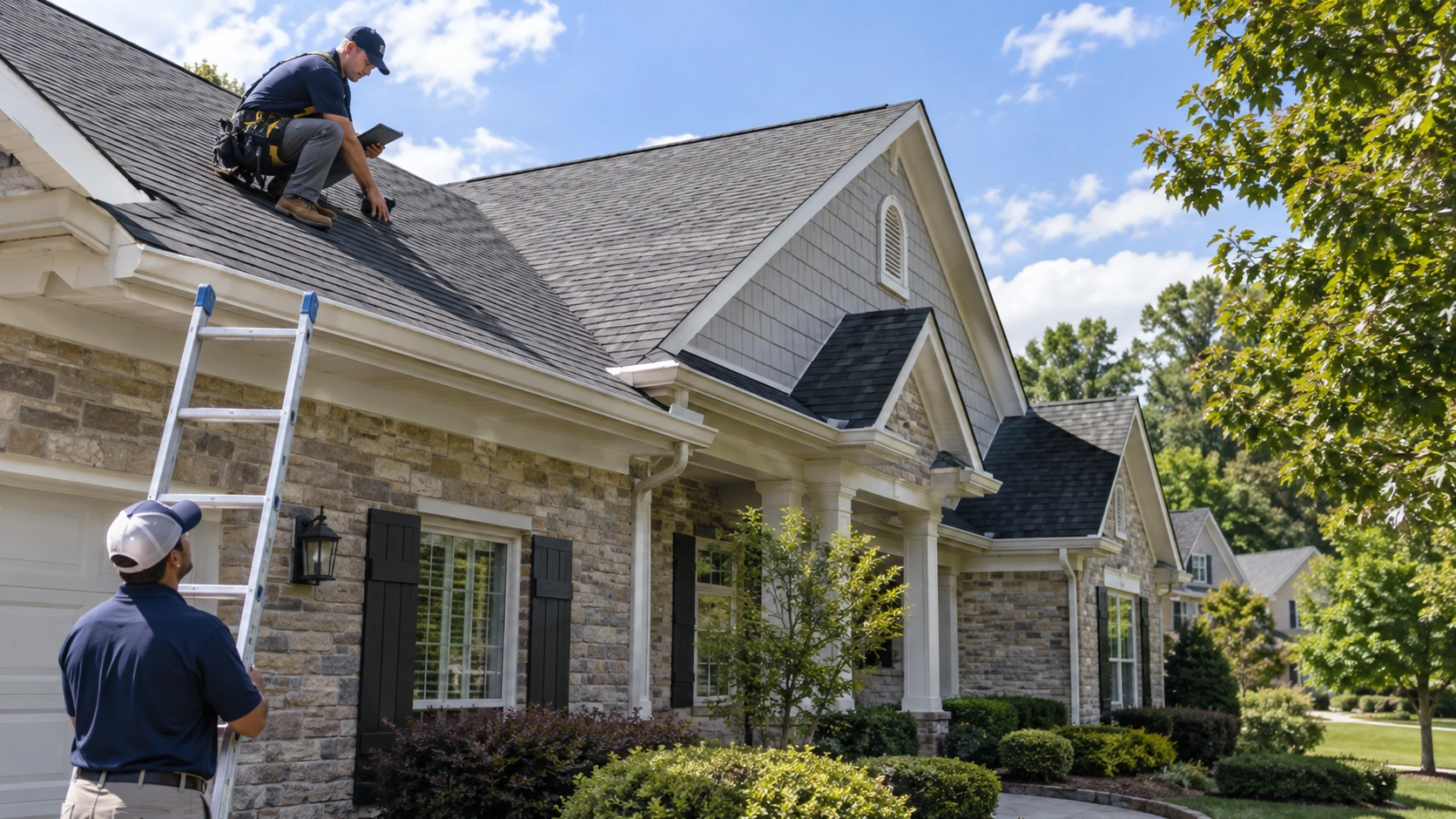
A roof can look perfectly fine from the driveway while problems are developing in places a homeowner cannot easily see. Loose flashing, worn shingles, damaged seals, moisture entry points, deteriorating pipe boots, and problems around valleys or roof penetrations may remain unnoticed until water reaches the interior of the home.
That is one reason a professional roof inspection in Charlotte, NC can be valuable even when there is no obvious leak. An inspection gives homeowners a clearer picture of the roof’s present condition, identifies areas that deserve attention, and helps separate minor maintenance concerns from problems that may require repair or eventual replacement.
For homeowners trying to protect one of the most important parts of their property, an inspection is less about finding something wrong and more about understanding what condition the roof is actually in.
Blue Rock CLT provides professional roof inspection services for homeowners who want a closer evaluation of their roofing system before making repair, replacement, storm-damage, or maintenance decisions.
A Roof Inspection Looks Beyond What You Can See From the Ground
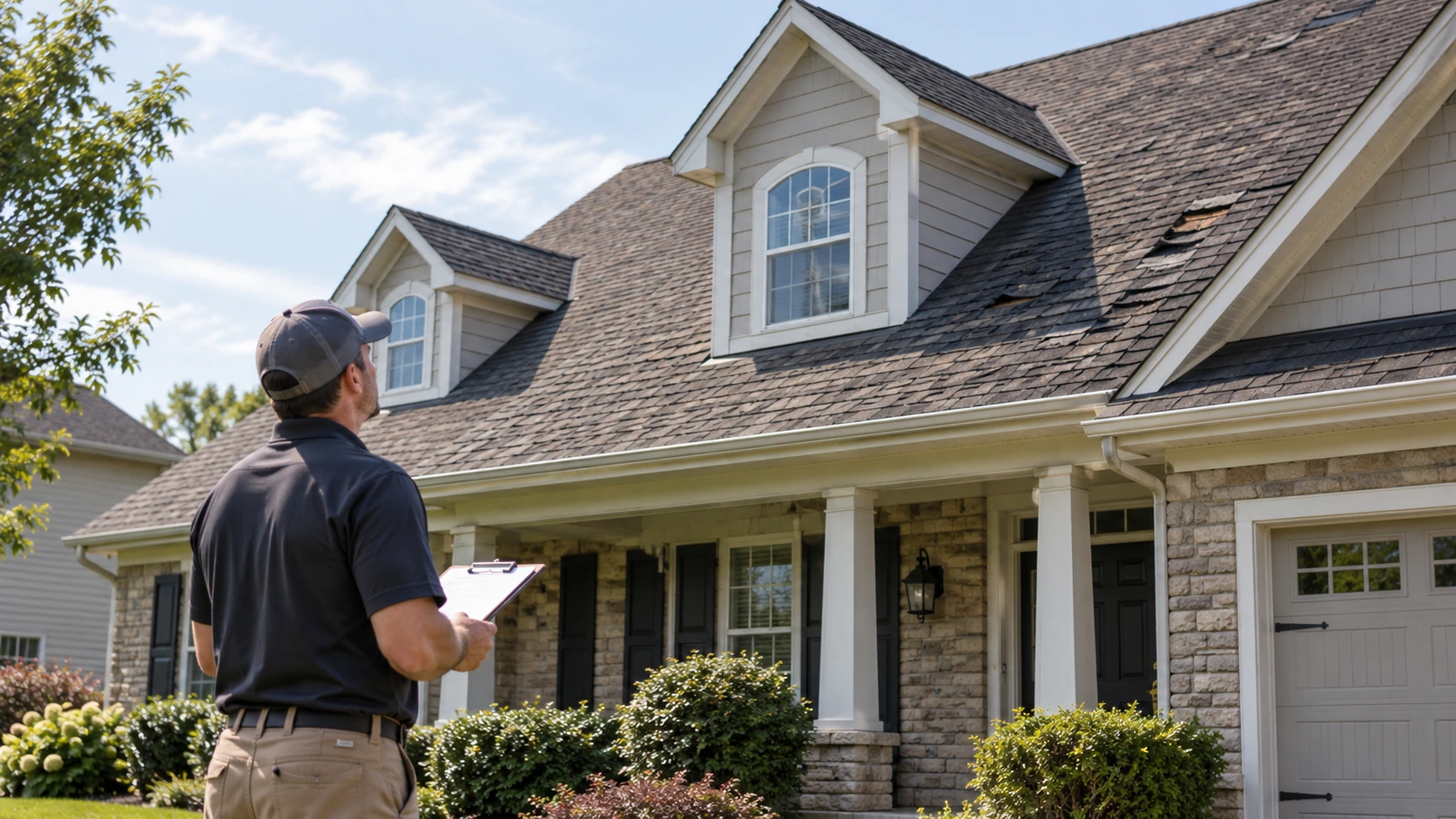
Many homeowners evaluate a roof by standing outside and checking whether shingles are missing or whether anything looks obviously damaged. That can reveal major problems, but it provides only a limited view.
A roofing system contains numerous components that work together to keep water out of the home. Shingles or metal panels are only the most visible layer. Flashing, vents, penetrations, valleys, roof edges, sealants, fasteners, drainage areas, and transitions between different roof sections can all influence performance.
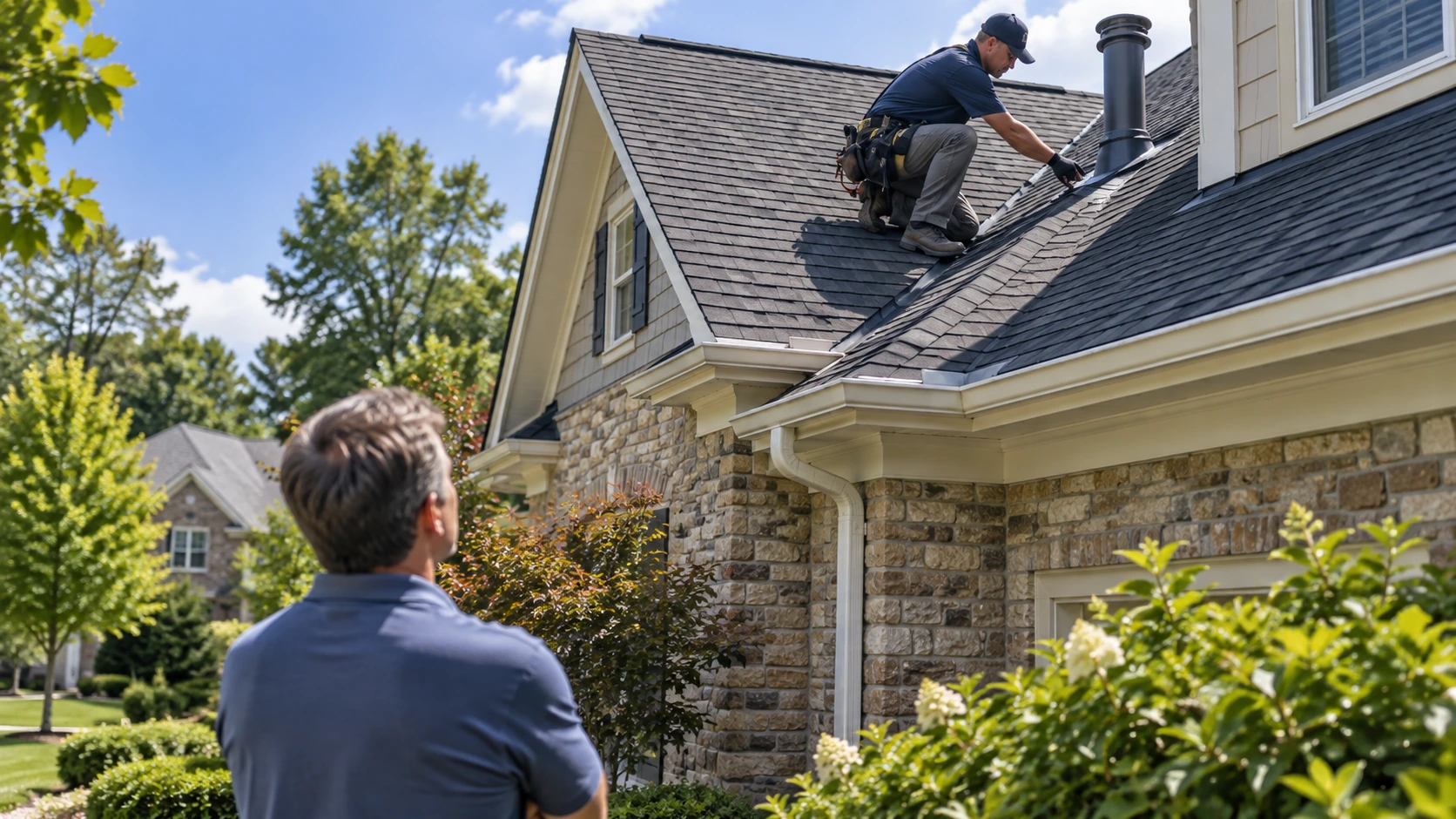
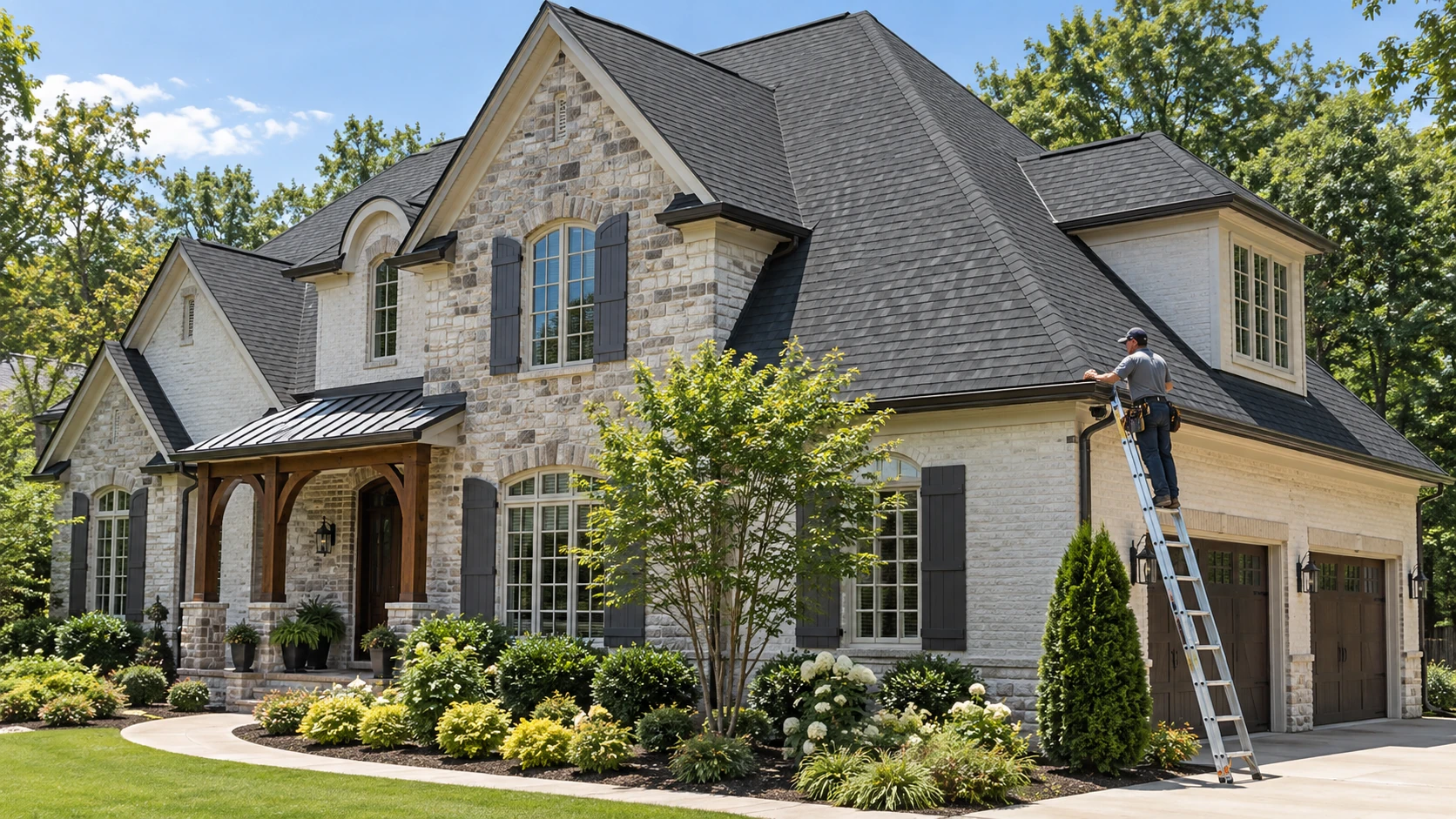
During a professional inspection, the goal is to examine these areas more closely and determine whether there are visible signs of deterioration, movement, damage, poor installation, or potential water entry.
A homeowner may notice a dark mark on a ceiling, for example, but the place where water becomes visible indoors is not necessarily the same place where it entered the roofing system. Water can sometimes move along decking, framing, or other building materials before appearing inside.
That is why identifying the source of a roofing problem often requires more than looking directly above the stain.
Homeowners who need broader help with their roofing system can also review Blue Rock CLT’s roofing services to understand the different types of roofing work that may follow an inspection.
Small Roofing Problems Are Easier to Address Before They Spread
Roof problems rarely become easier to deal with after they have been ignored.
Consider a hypothetical example. A small section of flashing begins allowing occasional moisture into an area near a roof penetration. There may be no dripping water, no obvious ceiling stain, and no visible damage from outside the house.
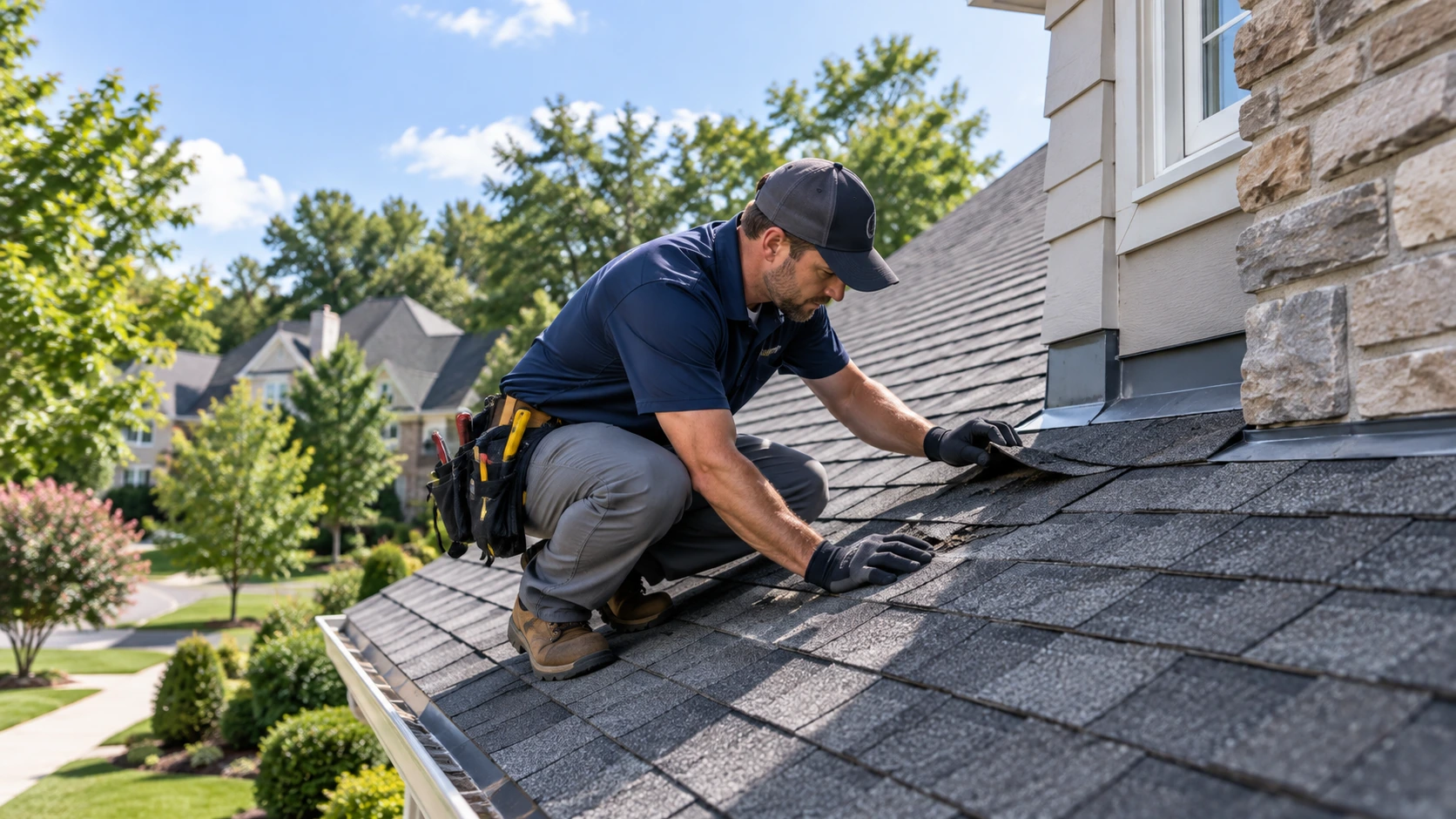
Because the problem is not discovered, moisture continues entering during certain weather conditions. Eventually, staining may appear inside the home. At that point, the homeowner may be dealing with both the original roofing issue and interior damage that developed afterward.
Finding an issue earlier does not mean every problem will be inexpensive or simple to correct. It does, however, give the homeowner more information and often more options.
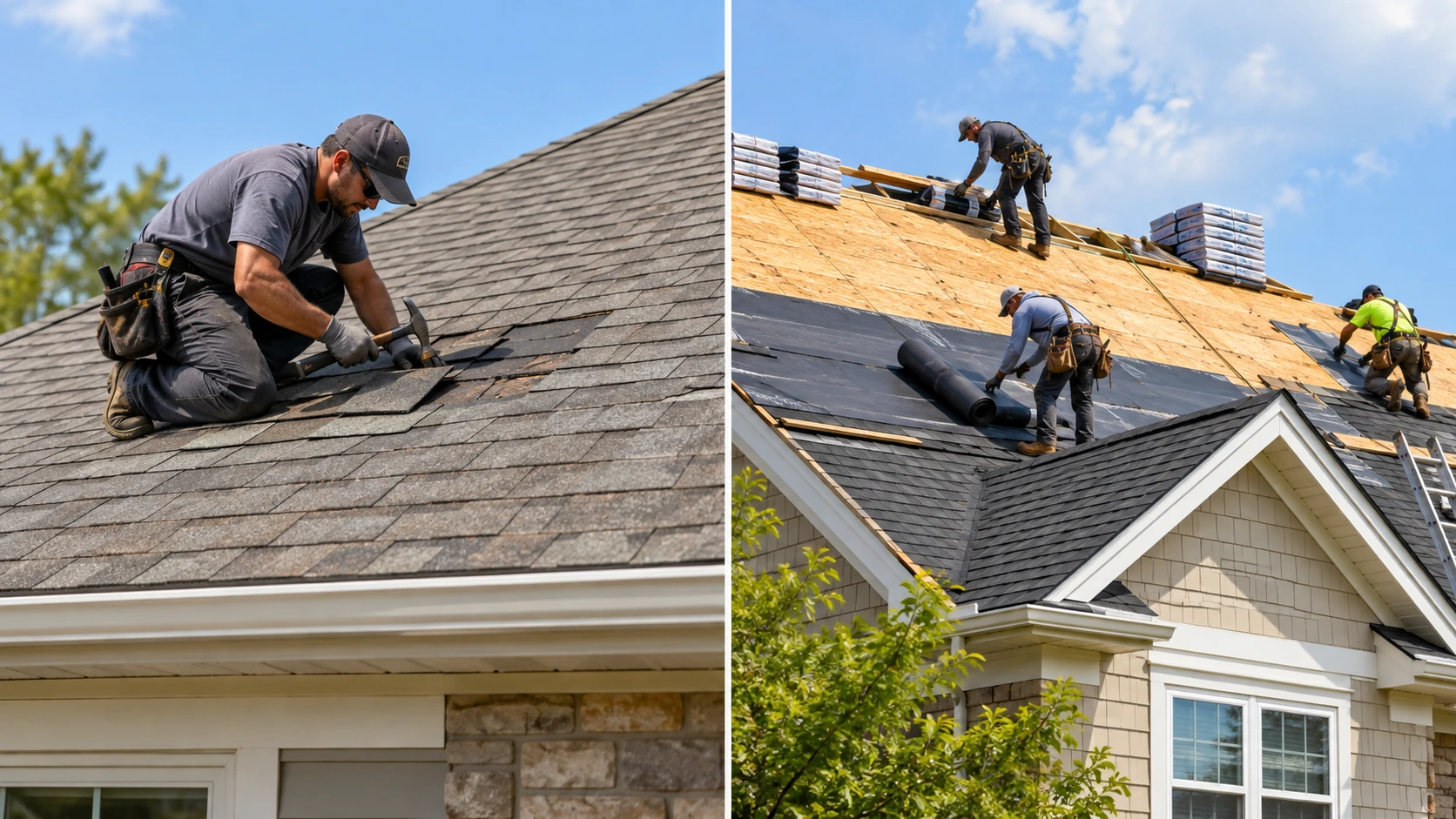
When an inspection identifies localized damage, roof repair services may be worth considering before automatically assuming that the entire roofing system must be replaced.
An inspection is therefore useful not only for discovering problems but also for understanding their scale.
Roof Inspections Can Help Identify the Cause of a Leak
One of the most common reasons homeowners investigate their roof is water appearing inside the house.
A ceiling stain may seem to provide a clear answer: the roof is leaking directly above that location. In practice, finding the actual entry point can be more complicated.
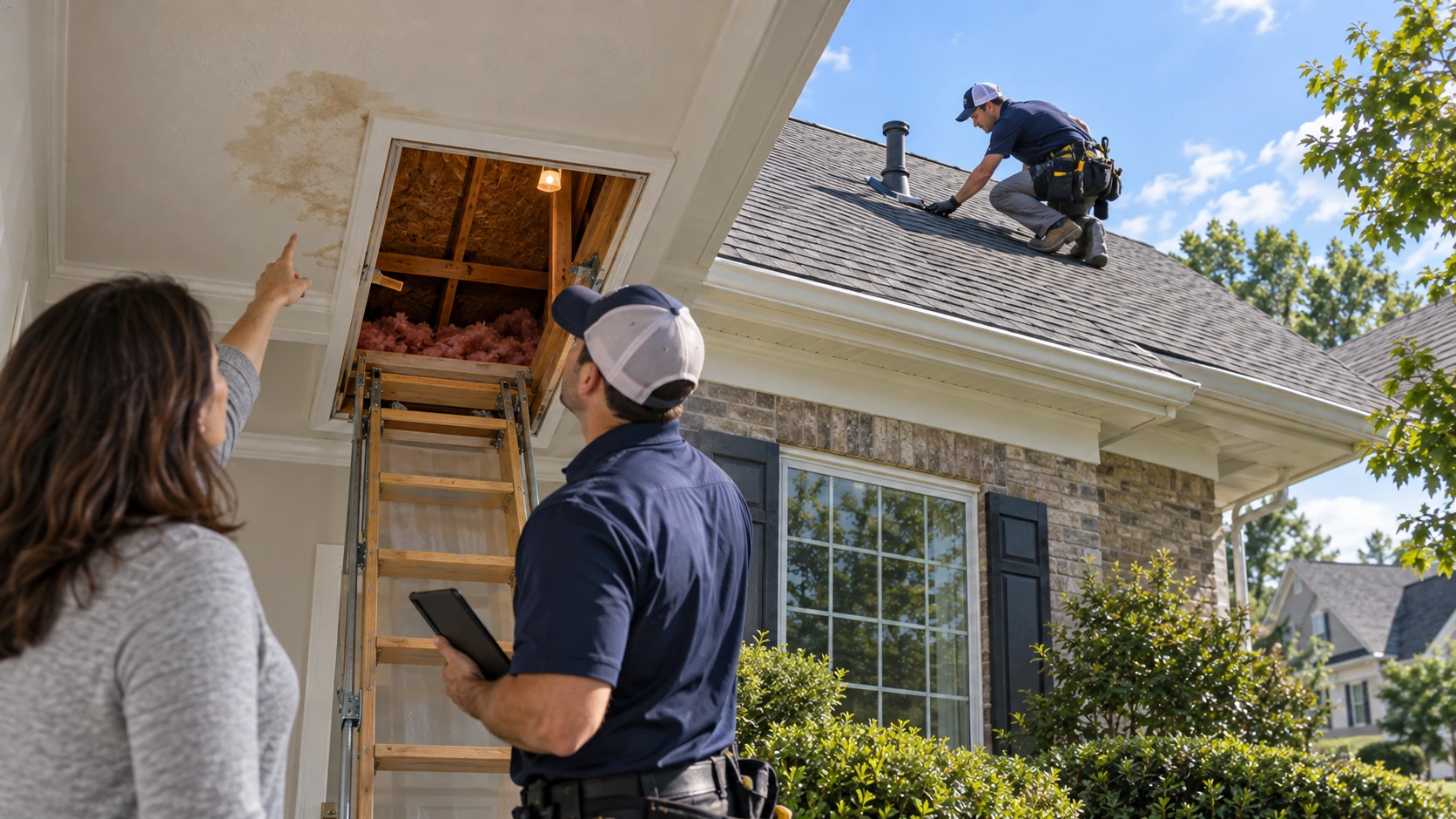
Water may enter around:
- Flashing
- Roof vents
- Plumbing penetrations
- Chimneys
- Valleys
- Damaged shingles
- Exposed fasteners
- Roof-wall intersections
- Skylight areas
- Damaged or deteriorated seals
After entering the roofing system, water can travel before becoming visible inside.
This is why simply covering the area directly above an interior stain may not solve the underlying problem.
A professional roof inspection attempts to trace the evidence back to its likely source and determine which roofing component needs attention.
If water is actively entering the home or the roof has suffered sudden serious damage, the situation may call for emergency roof repair rather than waiting for routine maintenance.
Storms Can Cause Damage That Is Not Immediately Obvious
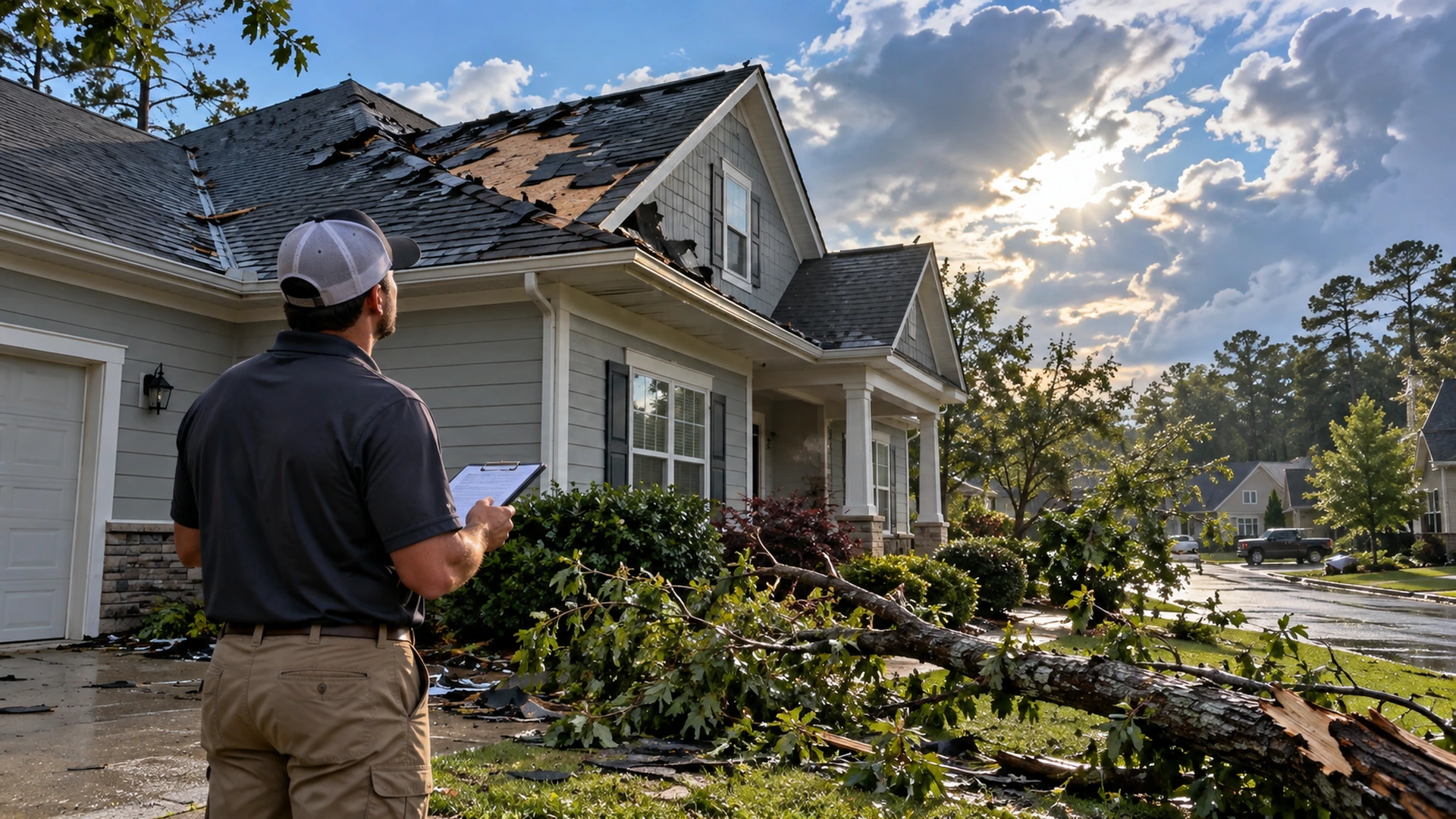
After a strong storm, homeowners usually look for obvious signs of roof damage: missing shingles, fallen branches, damaged gutters, or visible debris.
Those signs matter, but not every storm-related roofing problem is easily visible from the yard.
Wind can affect shingles, flashing, edges, and other roofing components without leaving a dramatic opening in the roof. Debris may also damage particular areas while surrounding sections appear normal.
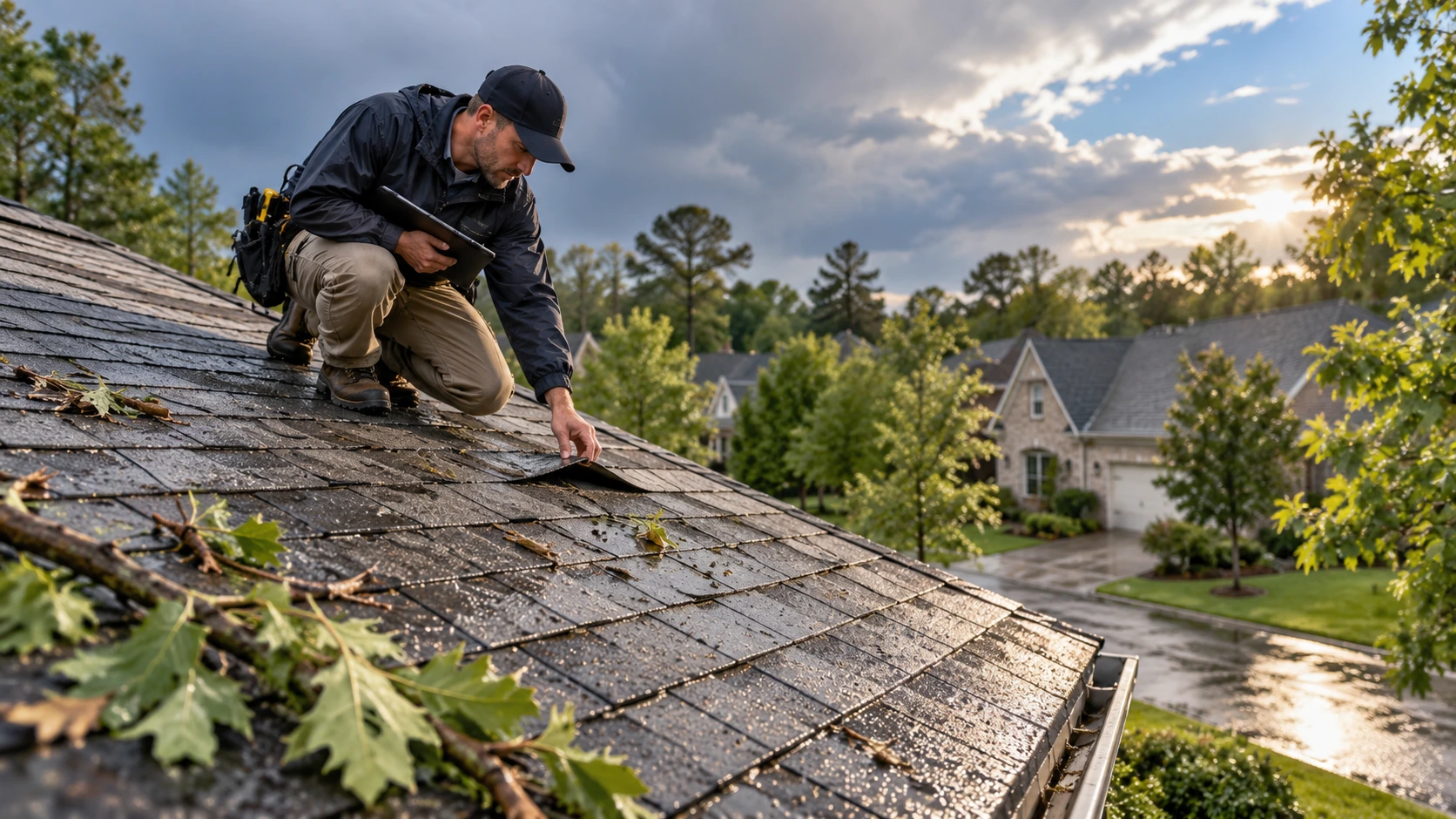
The absence of an immediate leak does not prove that the roofing system was unaffected.
A post-storm inspection can help determine whether there is visible damage that should be addressed and whether additional monitoring or repair makes sense.
Homeowners dealing specifically with weather-related concerns can review Blue Rock CLT’s storm damage roofing services for additional information about roofing problems following severe weather.
Blue Rock CLT also provides a detailed guide explaining how storm damage can affect your roof and what to do next.
The important point is not to assume that every storm causes serious roof damage. Instead, an inspection can provide evidence about what actually happened so the homeowner can decide what, if anything, needs to be done.
An Inspection Can Help Separate Repairable Damage From Larger Roof Problems
Discovering roof damage naturally raises another question:
Does the roof need to be repaired, or does it need to be replaced?
There is no single answer that applies to every property.
A localized problem may sometimes be addressed through repair, while widespread deterioration can create a different situation. The roof’s material, condition, extent of damage, history of previous problems, and other factors may all influence the decision.
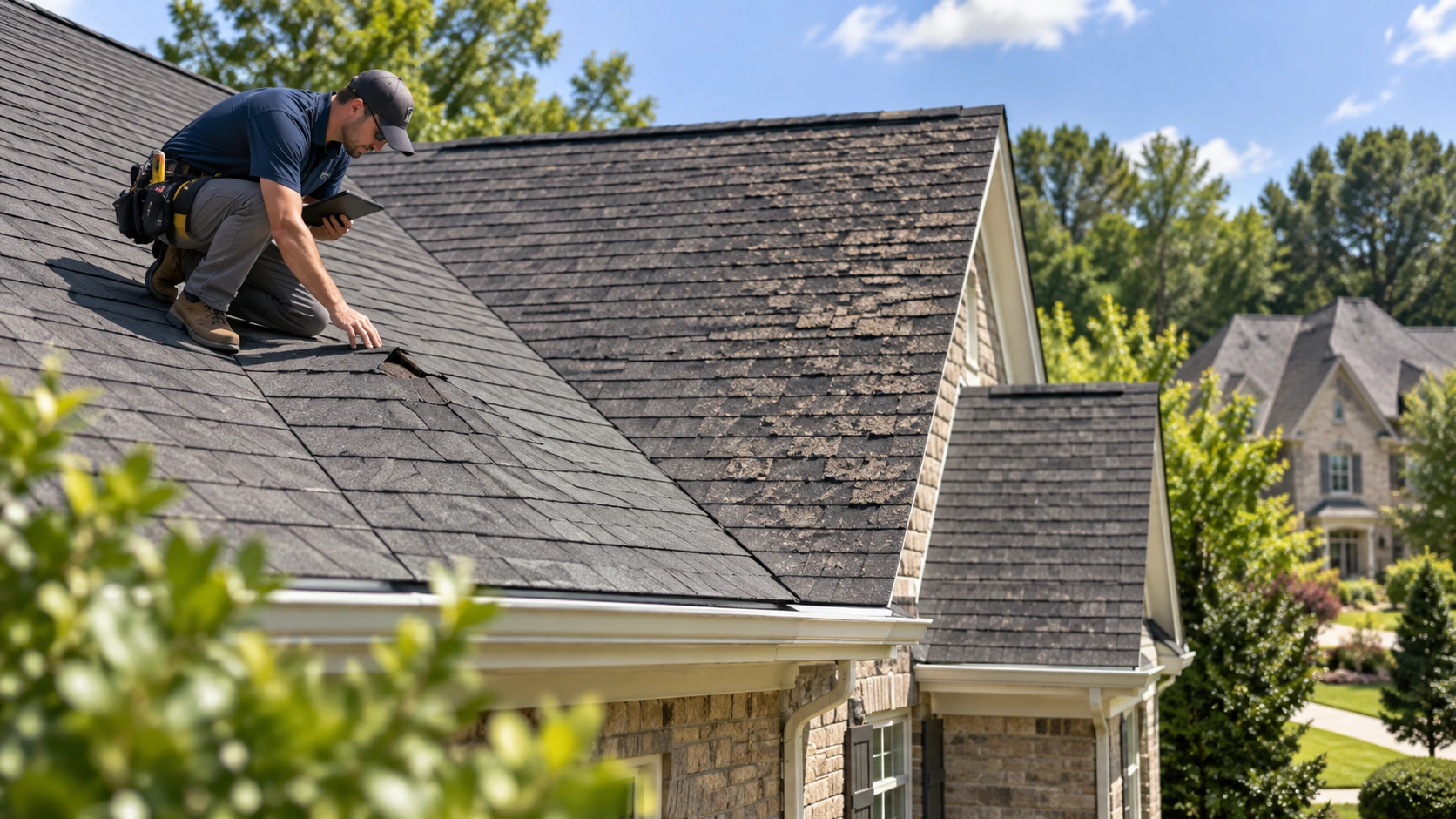
This is where an inspection becomes particularly useful.
Rather than making the decision based only on the presence of a leak, homeowners can look at the broader condition of the roofing system.
For example, a single damaged area on an otherwise serviceable roof presents a different situation from repeated problems appearing across several sections.
When replacement becomes the more appropriate direction, homeowners can explore Blue Rock CLT’s roof replacement services to understand what that process involves.
For a deeper explanation of this decision, the roof repair vs. replacement guide discusses the factors homeowners should consider before choosing between the two.
The Roofing Material Changes What Inspectors Look For
Not every roofing system should be evaluated in exactly the same way.
The material covering the roof influences what types of wear, damage, movement, or deterioration may be visible.
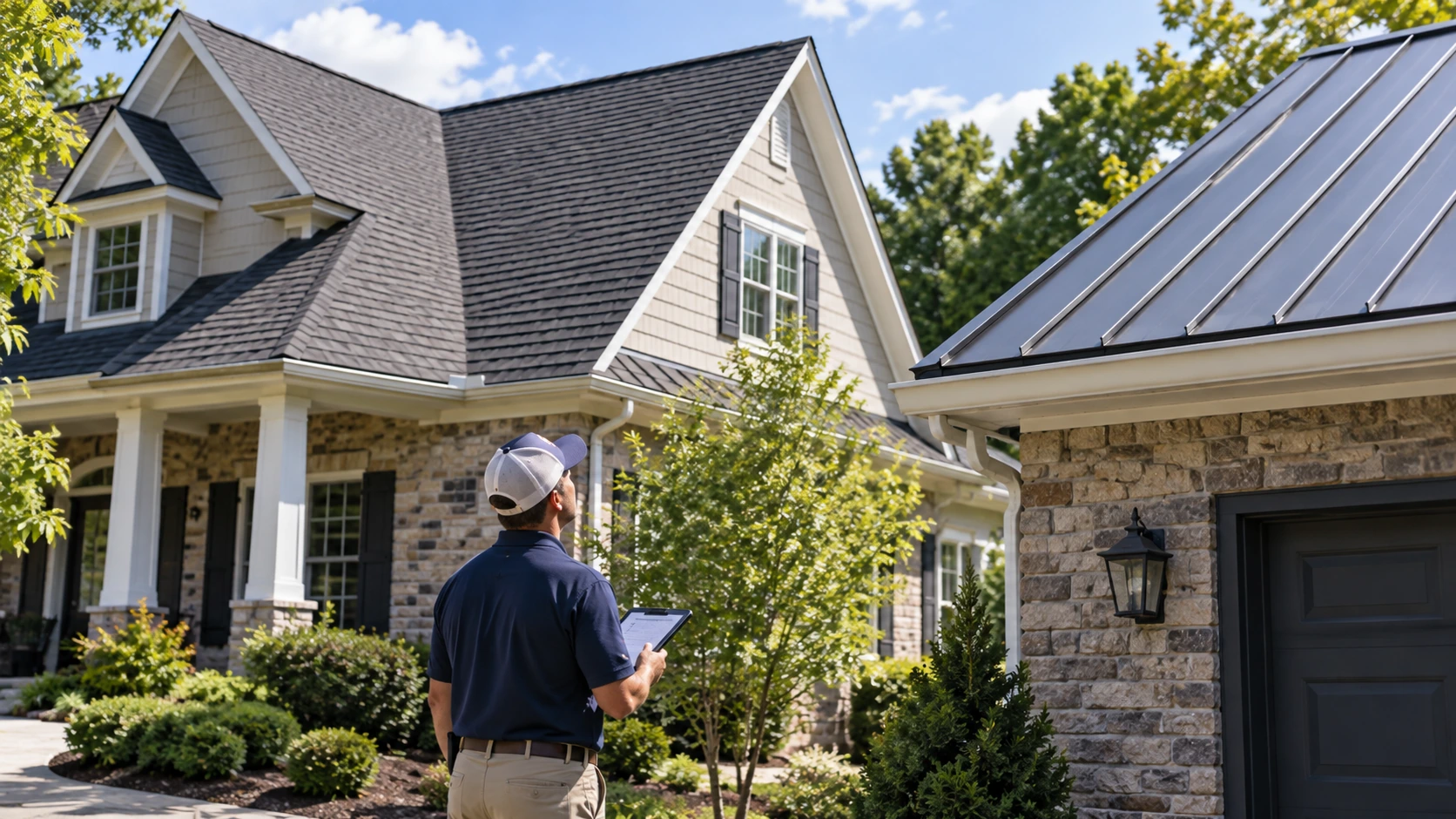
Asphalt and Shingle Roofing
With shingle roofing, an inspection may involve looking for issues such as visibly damaged, loose, missing, lifted, worn, or deteriorated shingles along with conditions affecting surrounding roofing components.
The surrounding flashing, roof penetrations, valleys, edges, and drainage areas also matter because a roof functions as a complete system.
Homeowners with this type of roof can review Blue Rock CLT’s shingle roofing services for additional information about shingle roofing options.
If deterioration has progressed to the point where a larger section of the roofing surface needs to be renewed, asphalt shingle replacement may become part of the discussion.
Metal Roofing
Metal roofs require a different evaluation because the system, seams, panels, fasteners, flashing details, and potential problem areas differ from asphalt shingles.
The inspection should match the actual roof rather than applying one generic checklist to every property.
Homeowners with metal systems can find additional information through Blue Rock CLT’s metal roofing services.
Understanding these differences is important because a condition that matters on one roofing material may not look the same on another.
Roof Age Matters, but Condition Matters More Than a Number Alone
Homeowners often ask how old a roof can become before it needs replacement.
Age is useful information, but it should not be considered in isolation.
Two roofs of a similar age may be in very different condition because their installation, materials, exposure, maintenance history, previous repairs, and past damage can differ.
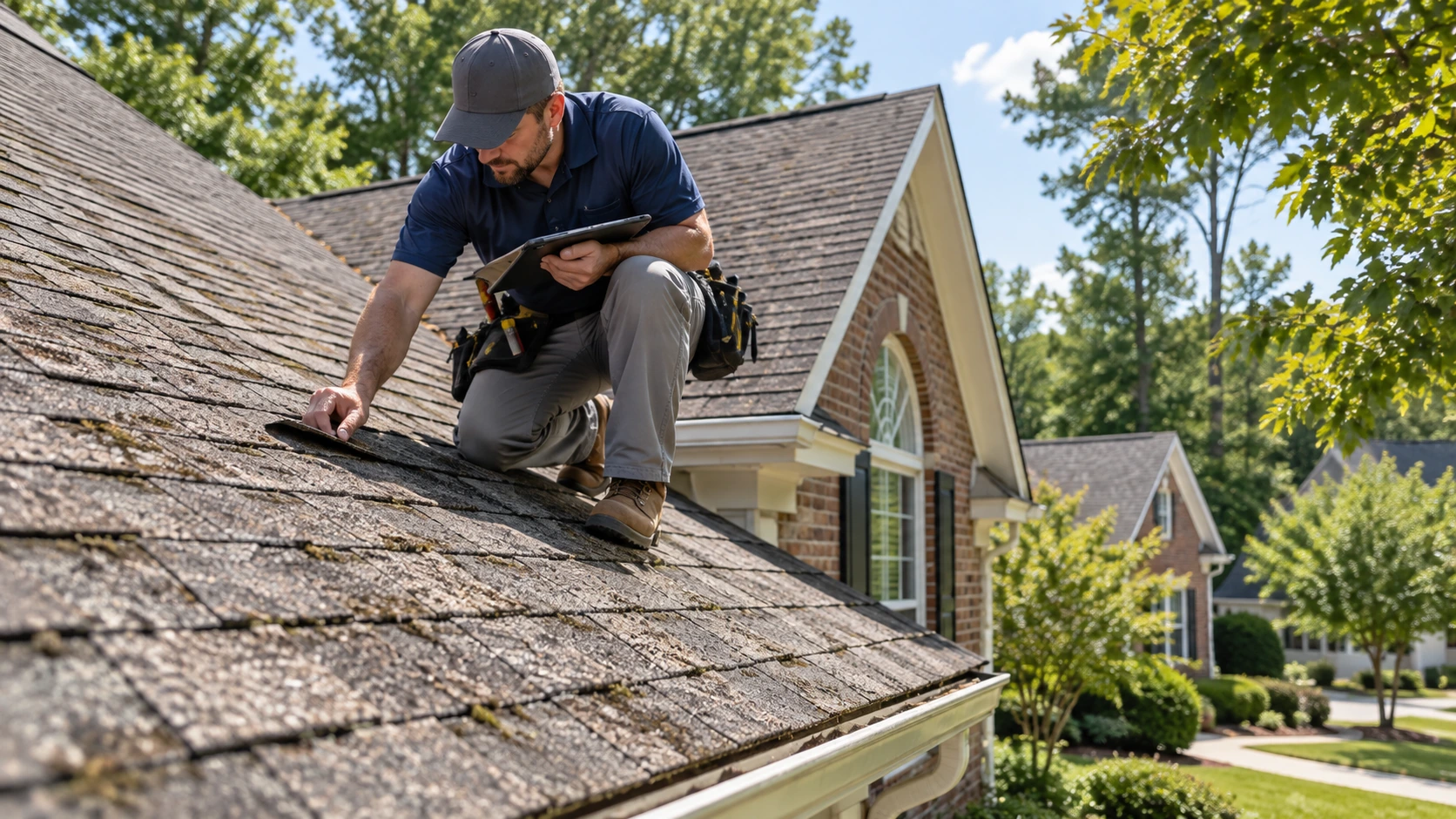
That is why an inspection focuses on the condition that exists now.
A newer roof may still need attention after physical damage or installation problems. An older roof, on the other hand, should not automatically be declared unusable solely because of its age.
The more useful questions are:
- What condition is the roofing material in?
- Are problems isolated or widespread?
- Has water entered the roofing system?
- Are repairs becoming frequent?
- Are flashing and penetrations performing properly?
- Are there signs that certain sections are deteriorating?
- Is previous repair work holding up?
- Does the roof currently need maintenance, repair, further monitoring, or replacement?
Homeowners who are beginning to question whether their roofing system is reaching the end of its useful condition can also review the guide on signs it may be time to replace your roof.
An inspection adds context to those warning signs.
Repeated Roof Repairs May Point to a Broader Issue
Repairing a roof once does not necessarily indicate a larger problem. Roofing systems can experience isolated damage.
The situation becomes more important when repairs repeatedly address similar symptoms without resolving the cause.
Imagine a homeowner who notices staining near the same ceiling area after several periods of rain. Each time, a visible exterior area is sealed, but the stain eventually returns.
At that point, continuing to patch the most obvious location may not be enough.
The roofing system needs to be evaluated more broadly.
Repeated problems may raise questions about flashing, nearby penetrations, underlying materials, transitions between roof sections, drainage, or previous repair work.
An inspection gives the roofing professional an opportunity to evaluate the relationship between these areas rather than treating every symptom as an isolated event.
This is one of the main differences between troubleshooting and simply patching.
The goal should be to understand why the problem is occurring before deciding what repair makes sense.
Roof Inspections Are Useful Even When There Is No Active Leak
Homeowners sometimes assume that inspections are only necessary after water enters the house.
That overlooks one of their main advantages.
A roof can develop visible wear or localized damage before an interior leak appears. Finding those conditions earlier gives homeowners an opportunity to understand what is happening rather than waiting until the problem becomes impossible to ignore.
There are several situations where an inspection may be worth considering:
- After significant weather affects the property
- When shingles or roofing materials appear damaged
- When debris has struck the roof
- When interior staining or moisture appears
- When previous repairs are causing concern
- Before making a repair-versus-replacement decision
- When the roof’s condition is uncertain
- When visible deterioration begins appearing
- When homeowners want a professional opinion about an older roofing system
- When preparing for roofing work
None of these situations automatically means that major work will be required.
The value of the inspection is finding out.
A Professional Inspection Can Provide Better Information Before Filing or Discussing an Insurance Claim
Storm-related roofing situations sometimes involve insurance questions.
Homeowners should avoid assuming that visible roof damage automatically means a particular repair will be covered. Coverage depends on the individual policy, the cause of damage, documentation, the insurer’s evaluation, and other circumstances.
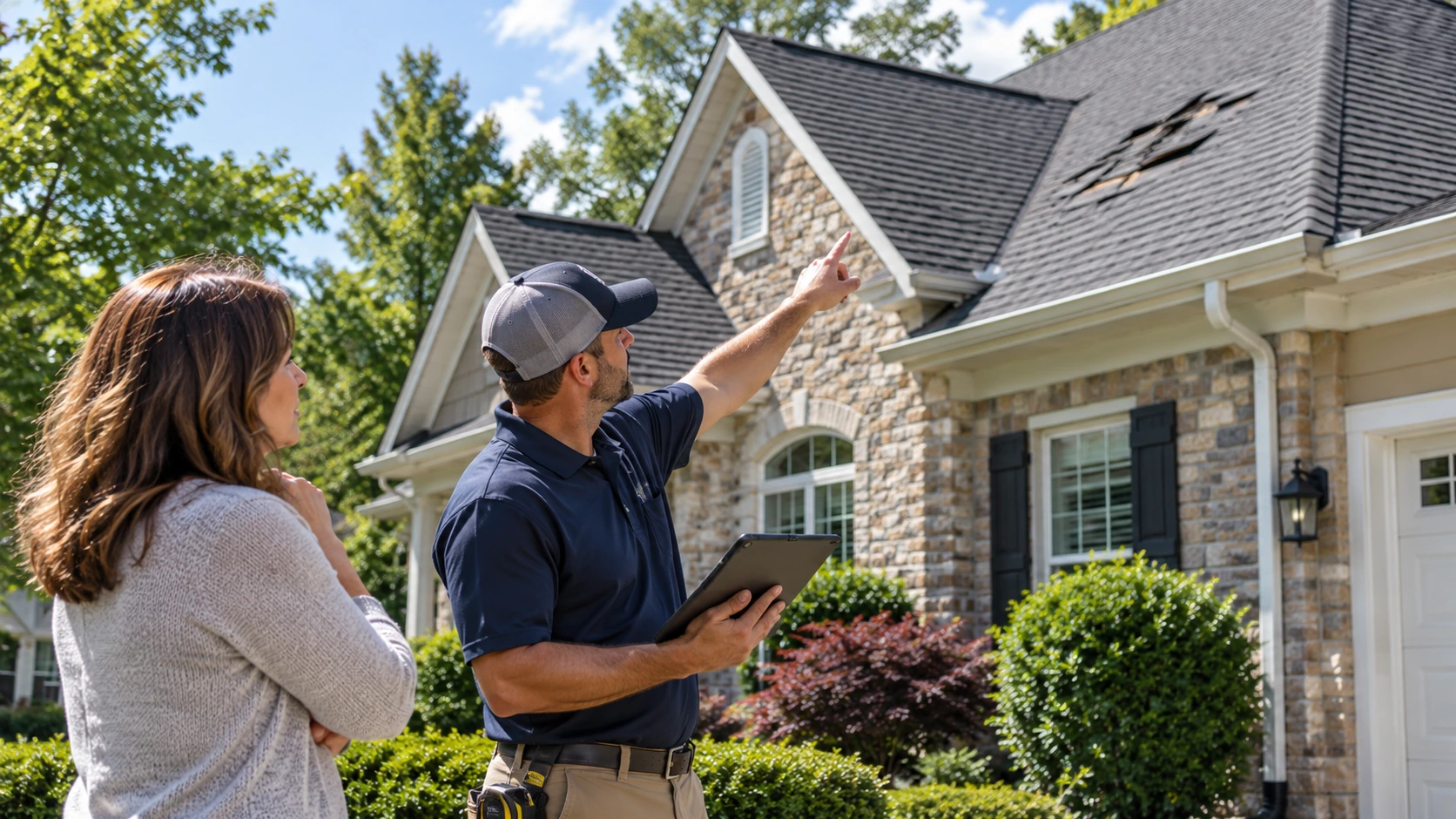
A roofing inspection can still be useful because it helps document the physical condition of the roofing system.
Clear information about affected areas may make it easier for homeowners to understand what damage has occurred before communicating with their insurance provider.
Blue Rock CLT offers insurance claims assistance for homeowners dealing with roofing damage and the repair process.
Homeowners should still rely on their insurer and policy documentation for decisions about coverage. A roofing contractor evaluates the roof; the insurance company determines what the policy covers.
Keeping those roles separate helps homeowners make better-informed decisions without assuming an outcome before the claim has been reviewed.
Inspections Can Help Homeowners Plan Instead of React
One overlooked advantage of a roof inspection is planning.
Without an inspection, homeowners may know very little about the condition of the roof until something fails.
That uncertainty makes budgeting and home maintenance more difficult.
An inspection may reveal that the roof currently needs only a specific repair. It may indicate areas that should simply be watched. Or it may show conditions that make a larger roofing project worth discussing.
Each outcome gives the homeowner useful information.
Consider two hypothetical situations.
In the first, a homeowner assumes an interior stain means the entire roof needs replacement. An inspection identifies a more localized problem. The homeowner can now discuss the appropriate repair rather than making a decision based on fear.
In the second, a homeowner assumes recurring leaks can continue being patched indefinitely. An inspection reveals deterioration across multiple sections. The homeowner now understands why repeated repairs may not address the larger condition of the roof.
Neither example assumes that repair or replacement is always the correct answer.
The purpose of the inspection is to make the next decision based on the actual condition of the roof.
A Roof Inspection Should Lead to Clear Information, Not Pressure
Homeowners should come away from an inspection with a better understanding of their roofing system.
That means the explanation matters almost as much as identifying the problem.
A homeowner should understand:
- What was observed
- Where the concern is located
- Whether the issue appears localized or widespread
- What may happen if the condition is left unaddressed
- Whether repair is reasonable
- Whether replacement should be considered
- Which areas may simply need monitoring
- What the next practical step is
Technical roofing terminology is only useful when it helps the homeowner understand the problem.
For example, simply saying that flashing has failed may not mean much to someone unfamiliar with roofing. Explaining that flashing protects vulnerable transitions and that damage in that area can create a potential path for water provides much more useful information.
A good inspection helps the homeowner understand the reasoning behind the recommendation rather than simply receiving a list of work.
Choosing the Right Roofing Contractor Matters After the Inspection
An inspection may lead to repair, replacement, monitoring, or no immediate work at all. If roofing work is recommended, choosing who performs it becomes the next important decision.
Homeowners should look beyond the first price they receive.
Ask contractors to explain what they found, what work they recommend, and why that recommendation fits the condition of the roof.
If two contractors recommend substantially different approaches, ask each one to explain the reasoning.
The contractor should be willing to discuss the affected areas rather than relying on vague statements about the roof being “bad.”
Blue Rock CLT’s guide on choosing a roofing and home improvement contractor in Charlotte provides additional questions homeowners can consider while evaluating a contractor.
A clear inspection followed by a clear explanation makes it easier to compare recommendations based on the work being proposed rather than price alone.
When Should Charlotte Homeowners Consider Scheduling a Roof Inspection?
There is no single event that determines when every roof should be inspected.
The decision should be based on what is happening with the property.
An inspection becomes particularly relevant when something has changed.

Maybe a storm recently moved through the area. Perhaps a ceiling stain appeared. A homeowner may have noticed shingles on the ground or visible wear on one section of the roof. Repairs may be recurring. The roof may simply be old enough that its current condition is uncertain.
In situations like these, waiting for more obvious damage may provide little benefit.
Inspection does not automatically mean repair, and repair does not automatically mean replacement.
Those are separate decisions.
The inspection provides the information needed to make them.
For homeowners who want to discuss a roof concern directly, Blue Rock CLT’s contact page provides a way to request an evaluation and discuss the condition of the property.
A Roof Inspection Gives Homeowners Something Valuable: Clarity
Most homeowners do not spend much time thinking about the roof until something appears wrong.
That makes sense. A roof that is doing its job tends to stay out of sight and out of mind.
The challenge is that roofing problems can develop before they become obvious from inside the home.
A professional roof inspection helps close that information gap.
Instead of guessing whether a stain is serious, whether storm damage occurred, whether another repair makes sense, or whether replacement should be considered, homeowners can begin with a clearer understanding of the roofing system’s current condition.
That information makes every decision that follows easier.
If you are concerned about the condition of your roof, Blue Rock CLT can perform a professional roof inspection and explain what is visible, which areas deserve attention, and what next steps may make sense for your property.
Request a free estimate and roof evaluation from Blue Rock Roofing Construction.